Young Syria
A bold vision for the country’s future


Young Syrians have a bold and ambitious vision for Syria’s future. Despite the trauma they have endured and their ongoing battle for survival amidst the ruins of Syria’s economy, young people, aged between 18 and 35, remain remarkably active, engaged in their communities and hungry for change. They desperately want a different future. They want Syria’s transitional government to prioritise economic regeneration and job opportunities. But, as our research reveals, not at any cost. For young Syrians, accountability, the rule of law and democratic freedoms are non-negotiables. They want to see a new, stable, Syria united around core, protected rights. And at its heart, they want to see justice.
Given that they endured a childhood of war, the commitment of this generation to their communities and to the future of their country is astounding. These young people are asking for the space to experiment, to organise and to participate. It is vital at this pivotal, fragile moment for Syria – as its future is being designed – that policymakers in the country and around the world listen to and act on their demands. In this critical phase of political and social transformation, young people must be meaningfully included in the decisions that will shape their lives. They are central to Syria’s prospects – for healing and renewal, for peace, growth and a stability built on justice, democracy, rights and freedoms.
This new research by The Syria Campaign, capturing the voices of hundreds of young Syrians – across Syria and the diaspora – is essential reading for anyone interested in what comes next for the Syrian state and for the country’s future

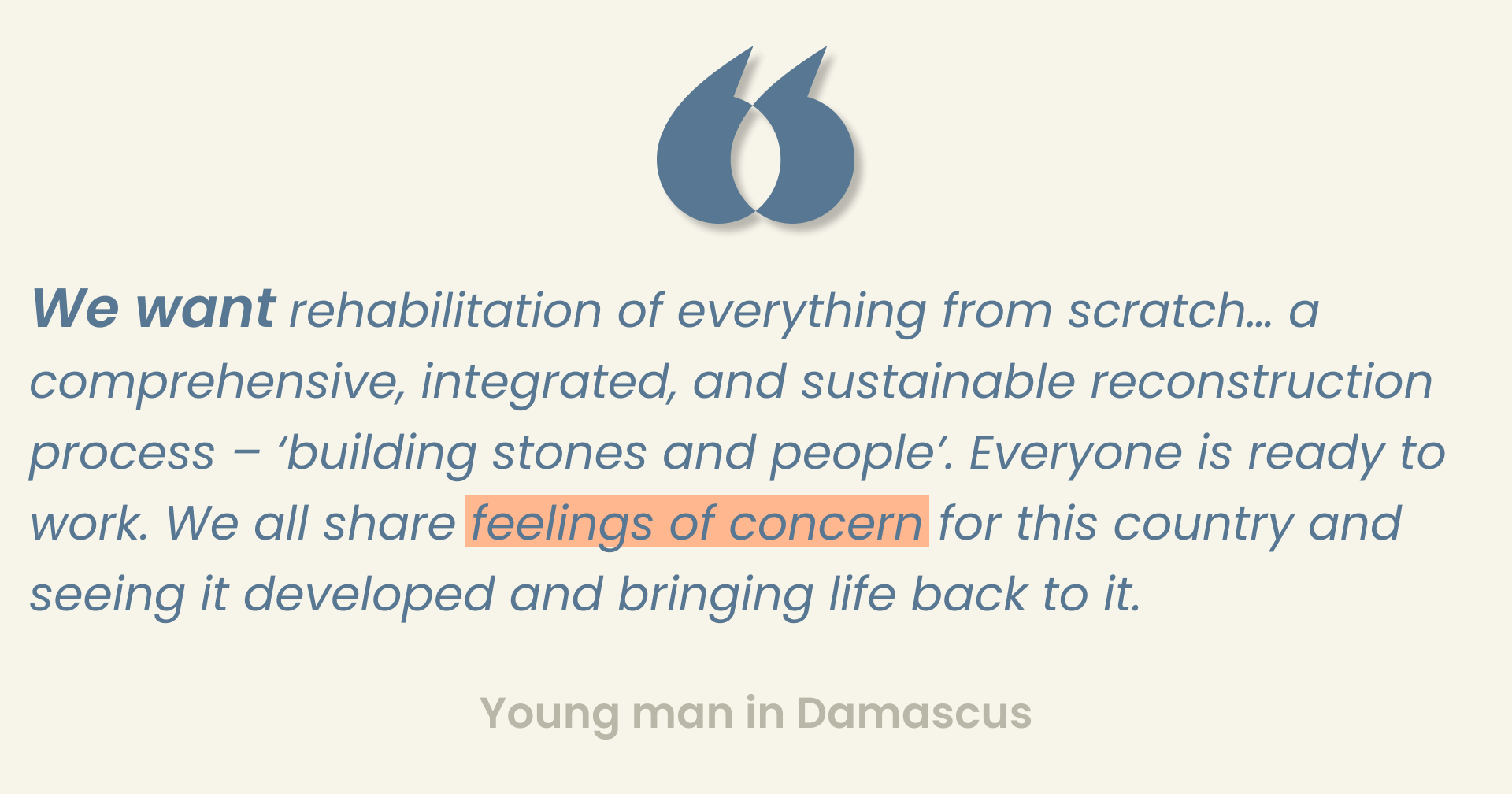


What Do Young Syrians Want?


We asked young Syrians what they believe the transitional government should prioritise and about their own priorities for Syria’s future.
1. Justice: 50%
of survey respondents chose ‘justice and the rule of law’ and 30% ‘the implementation of transitional justice’ as their primary hope for the next five years.
2. Jobs: 64%
say the creation of employment opportunities should be the highest priority for the transitional government.
3. Rights: 58%
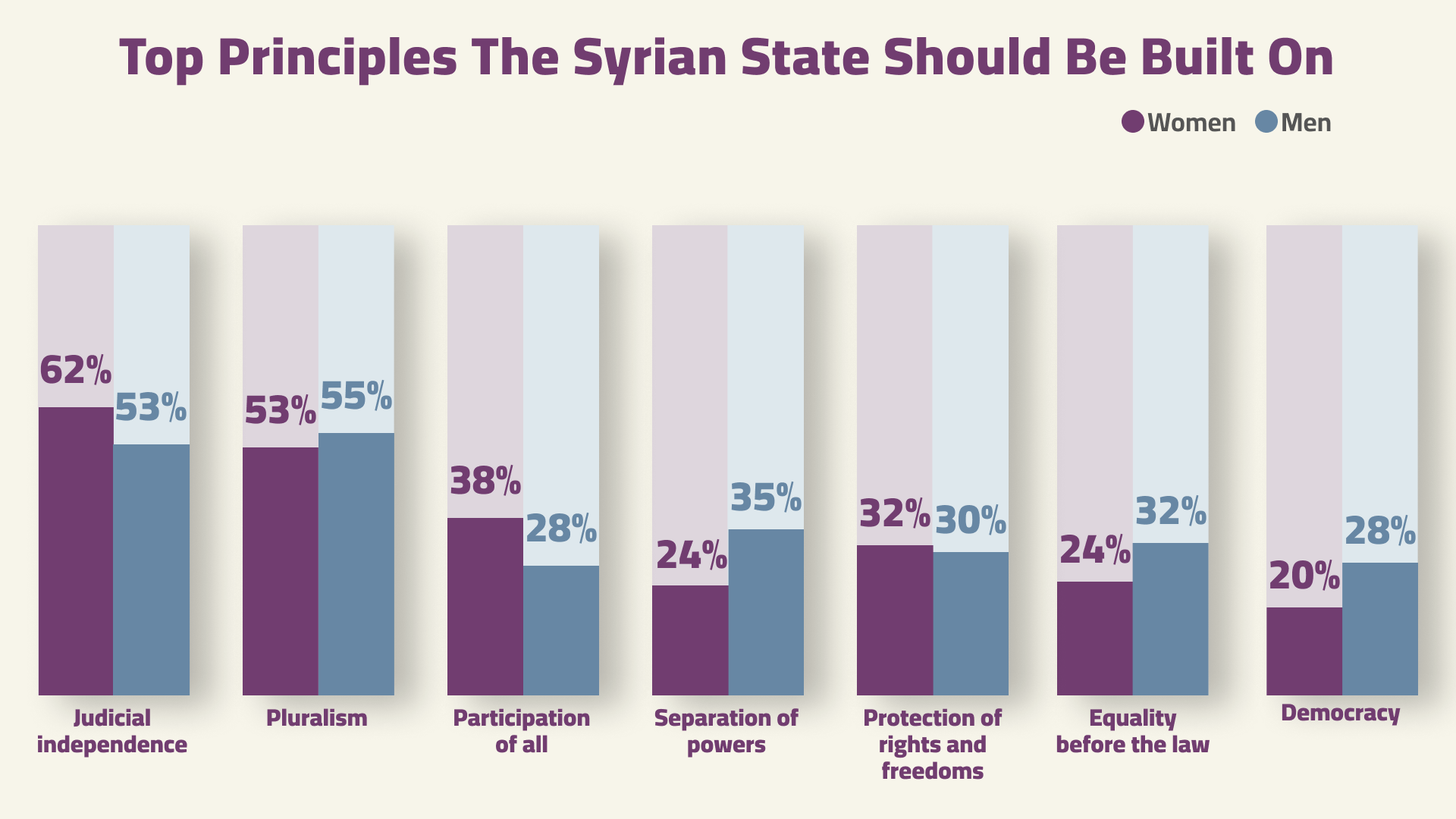
think rights and freedoms should be the most important principle in governing Syria’s future; 57% choose democracy and 55% equality before the law.

How Did We Find Out?


Our research was designed to answer 4 core questions around:
- Young people’s aspirations for Syria's future, specifically around governance structures and transitional justice
- The specific actions young people want from government, civil society, and international actors
- The primary challenges facing Syrian young people in their daily lives and in civic participation
- And the current levels and patterns of youth participation in public life and decision-making.
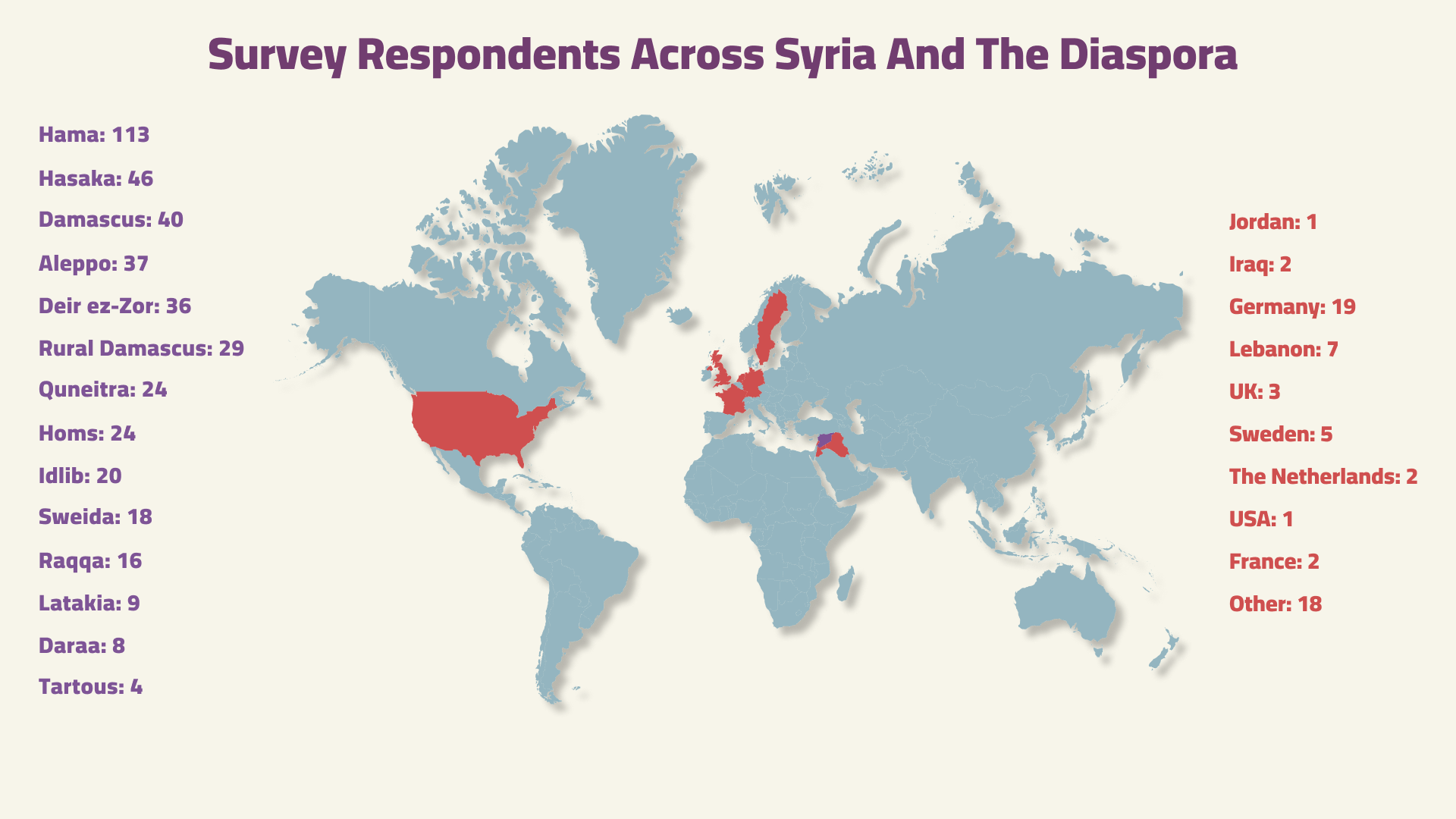
To gather answers to these questions, we surveyed just over 500 and spoke with 160 young people aged 18-35 across Syria and the diaspora. We underpinned this research with in-depth interviews with 5 experts in civil society, media, gender, diaspora and youth organisations.
Data types
502 online survey respondents (across 14 governorates and diaspora communities)
Qualitative discussions with 160 youth participants
5 in-depth key informant interviews with experts


Who Did We Speak to?


The young people who engaged with our research were aged between 18 and 35 years and located in Syria or across the world. They shared their views through an online survey in Arabic or through qualitative discussions between December 2025 and February 2026.
Through in-depth interviews, we spoke with experts in gender, Syrian civil society and media and diaspora youth activism.
All participants shared their views anonymously and qualitative discussions were designed to be diverse and safe in make up and discussion. Researchers were trained in trauma-informed approaches and all quotes are attributed only by location and gender.
A note on the survey: Many of the questions gave respondents the opportunity to select more than one answer. The findings percentages have been rounded to the nearest whole number.
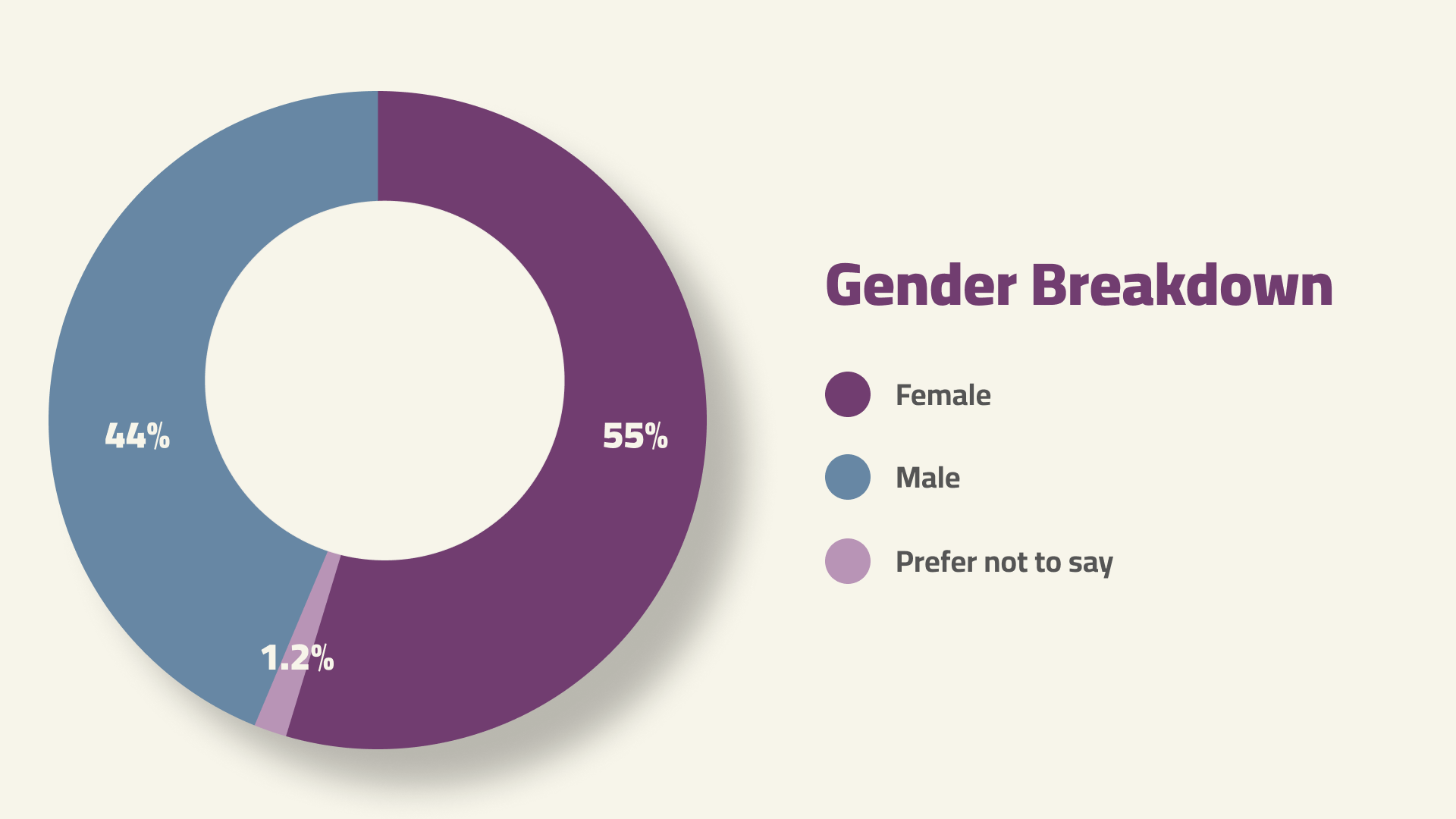
Source: Online survey of 502 young Syrians aged 18-35

Life in Syria: the harsh reality
In December 2024, Bashar al-Assad fled Damascus on a Russian jet bringing an abrupt end to decades of brutal, repressive rule. Since that night, Syrians have been searching the ruins of his regime trying to piece together a way forward for their country.
In March 2025, authorities announced a new transitional government to be led by former HTS leader Ahmed al-Sharaa. This government will administer the country for five years until a permanent new constitution is adopted and national elections can be held.
But conditions remain extraordinarily challenging. Syria’s economy is in tatters. In 2025, it grew by just 1%. Nine out of 10 Syrians are living in poverty, with 66% in extreme poverty. Around 75% of Syria’s population now depends on some form of humanitarian aid. Unemployment is high and, even for those in work, the cost of living far exceeds typical wages. Even as the provision of vital services, like electricity, improves in some areas, many cannot afford the bills.
The security situation remains volatile and uneven across different regions. Identity-based killings, including massacres of Alawite and Druze civilians in March and July 2025 by government and allied forces, damaged trust in the country’s interim government. Armed actors such as Islamic State and former regime elements are ready to capitalise on local grievances and growing frustrations, while external actors such as Israel are seeking to cement their own influence by capitalising on tensions between the transitional government and communities like the Druze in southern Syria. In early 2026, a spike in hostilities between the government and US-backed Syrian Democratic Forces (SDF) in the northeast of the country displaced more than 170,000 people.
Civil society in Syria remains highly restricted. Despite the interim government’s stated plan to repeal it, laws such as Law No.93, used by successive Assad regimes since 1958 to control civil society organisations and deny Syrian citizens their right to freedom of association, remain in place. Preliminary steps towards implementing a process of transitional justice, including the establishment of two National Commissions, have been made, but early progress has been slow and confidence in the parameters, legitimacy and neutrality of the process remains patchy.
What Young People Want


Economic opportunity

86% of our survey respondents cite economic challenges as their primary concern in daily life. This finding remains largely consistent across regions, genders, age sub-categories and displacement status suggesting economic pressure is a shared reality for most young Syrians.
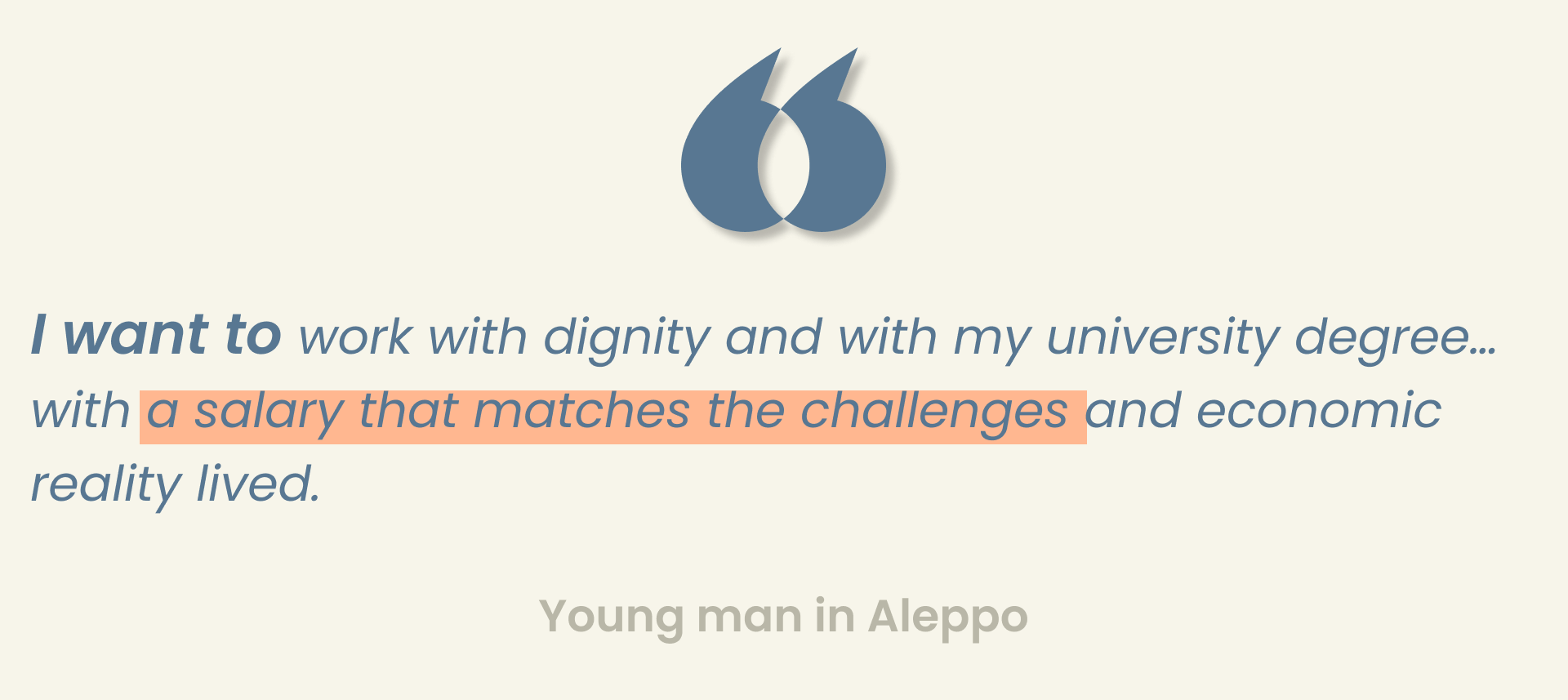
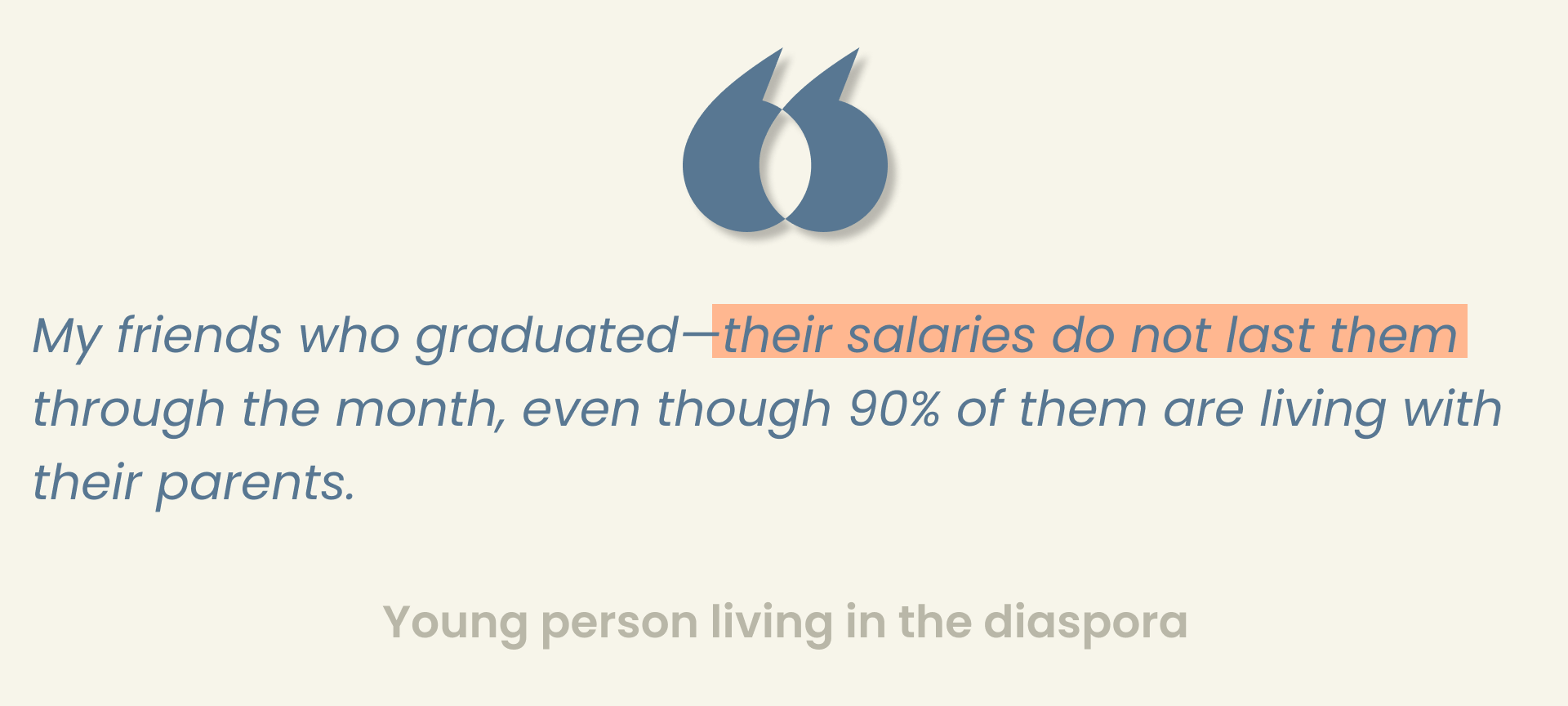
For young people, the employment crisis is particularly acute: 64% say the creation of job opportunities should be the number one priority for the transitional government, with 39% citing the lack of job opportunities as one of their top concerns. Even those with jobs earn salaries that fail to cover basic needs, forcing continued dependence on family support – when it’s available – well into adulthood.

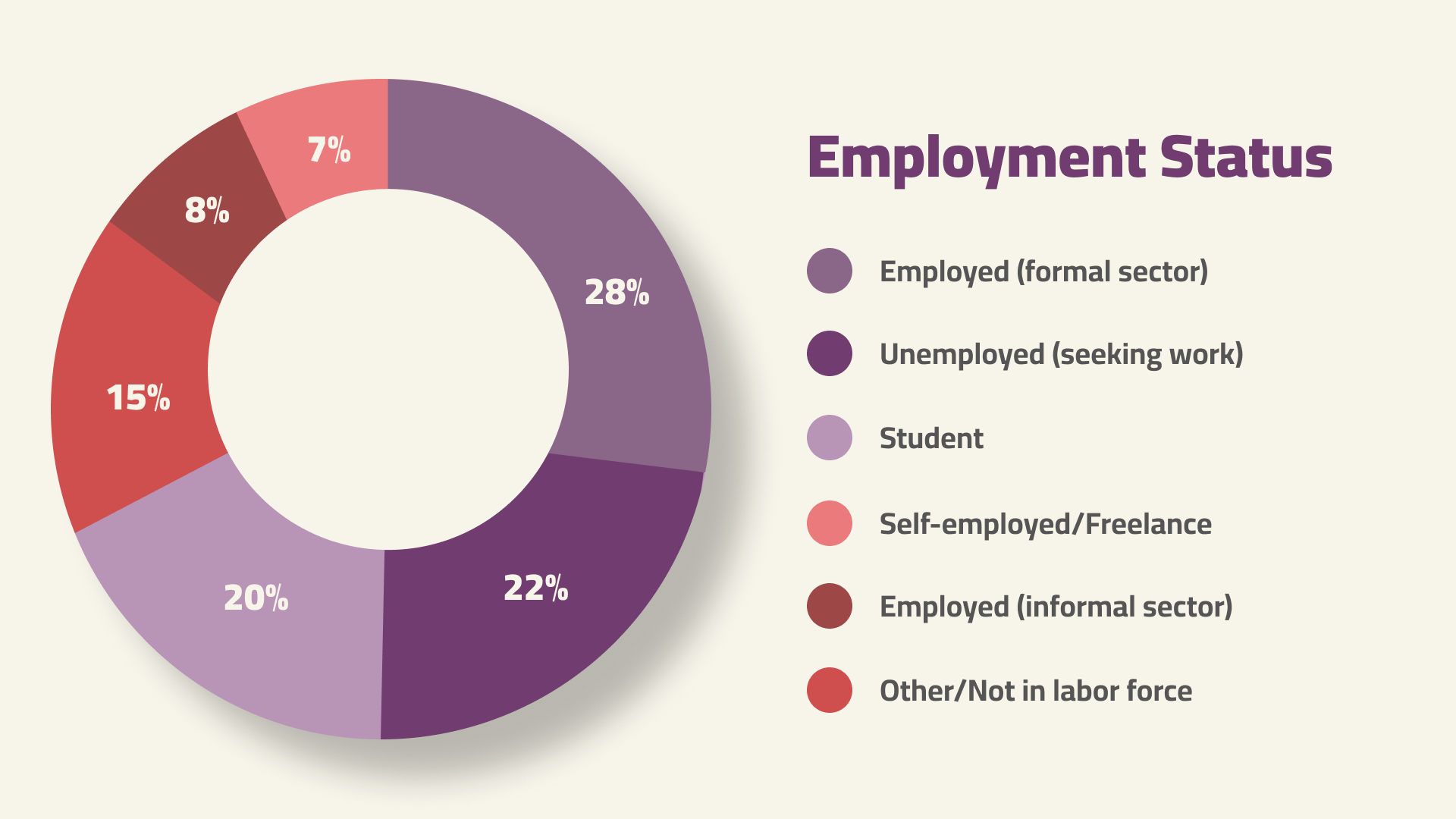
The proportion of young Syrians engaged in the informal economy, whether through informal or seasonal work (20%) or job-seeking (23%) is almost as large as those in formal employment, leaving them vulnerable to exploitation in a largely unregulated labour market.
The young Syrians we spoke to were full of ideas about how their economic prospects could be improved. They suggested targeted youth employment initiatives, hiring quotas and apprenticeships linking education to employment. They called for support for entrepreneurs, accessible microfinance programmes and simplified business registration processes. And they want to see economic regeneration evenly distributed across geographic regions, through the creation of incentives for investment beyond Damascus and links between regional development and youth employment opportunities.
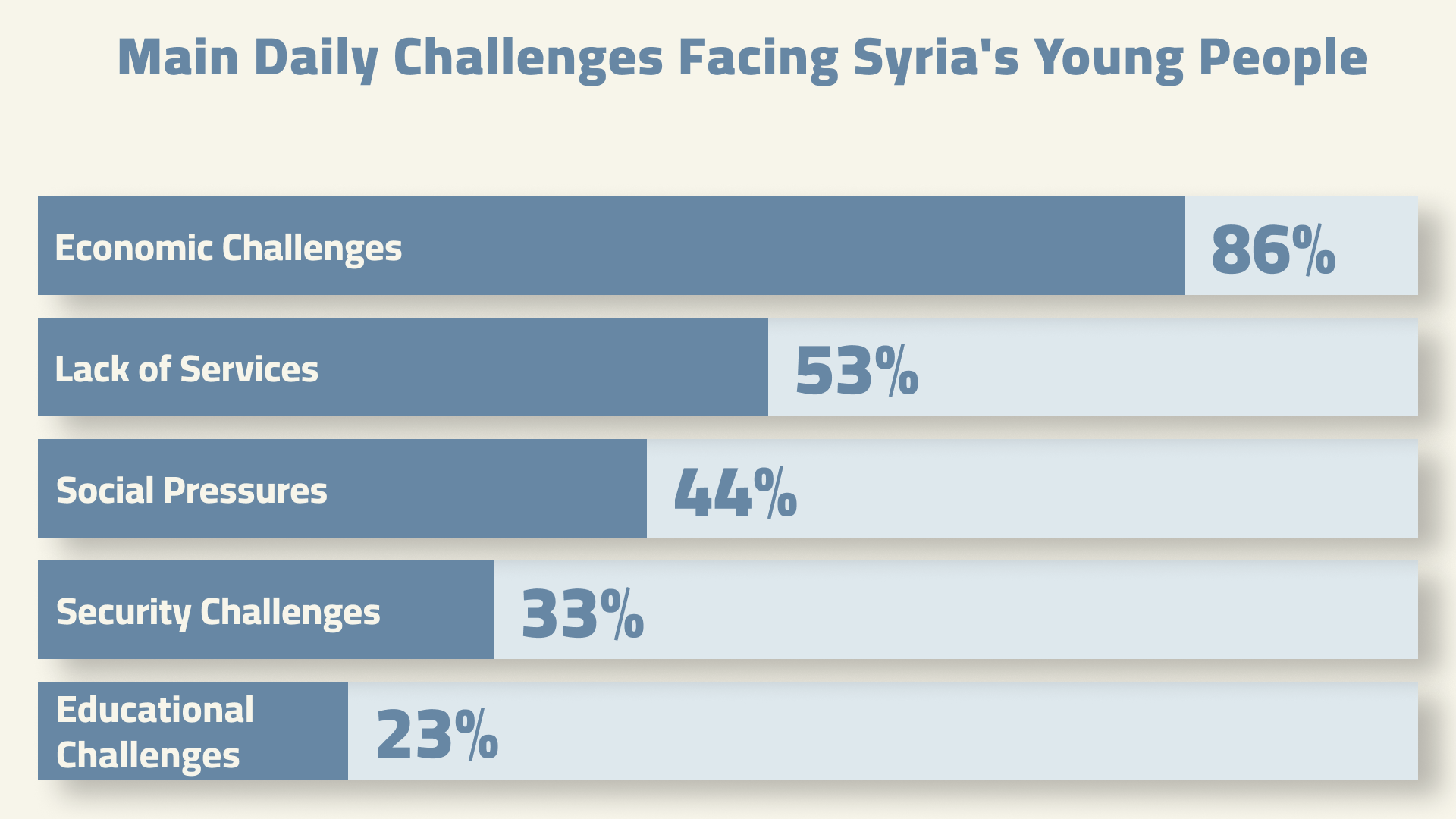
Source: Online survey of 502 young Syrians aged 18-35 (respondents could select up to three answers)
Rights and freedoms

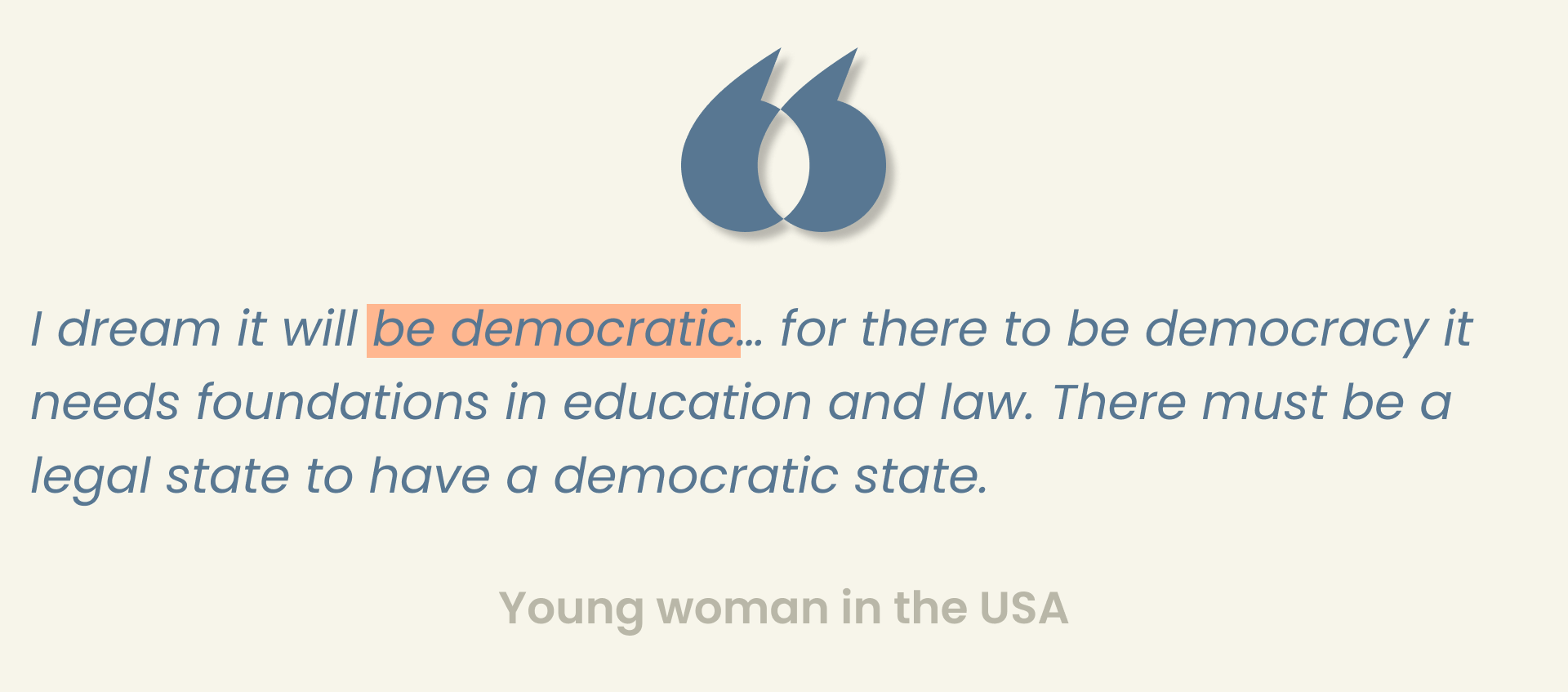

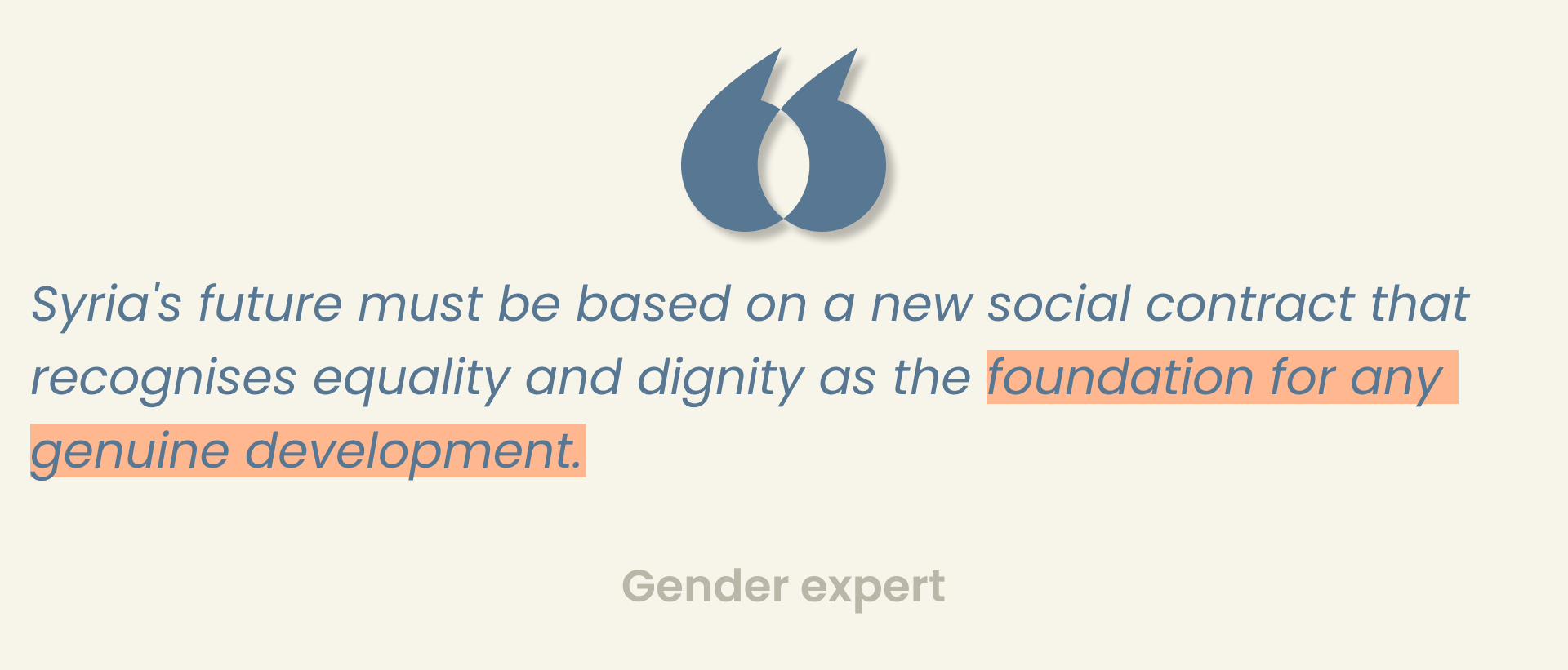
It’s clear that, after years of unchecked, arbitrary state power, Syrian youth want to see the creation of a rules-based system in which the power of the state is defined, limited and predictable and in which individual rights and freedoms are guaranteed.
58% of young people put rights and freedoms at the very top when asked which principles they believe should govern Syria’s future; 57% chose democracy and 55% equality before the law. And, when asked about their aspirations for the next five years, 50% put seeing the implementation of the rule of law in Syria as one of their top priorities.
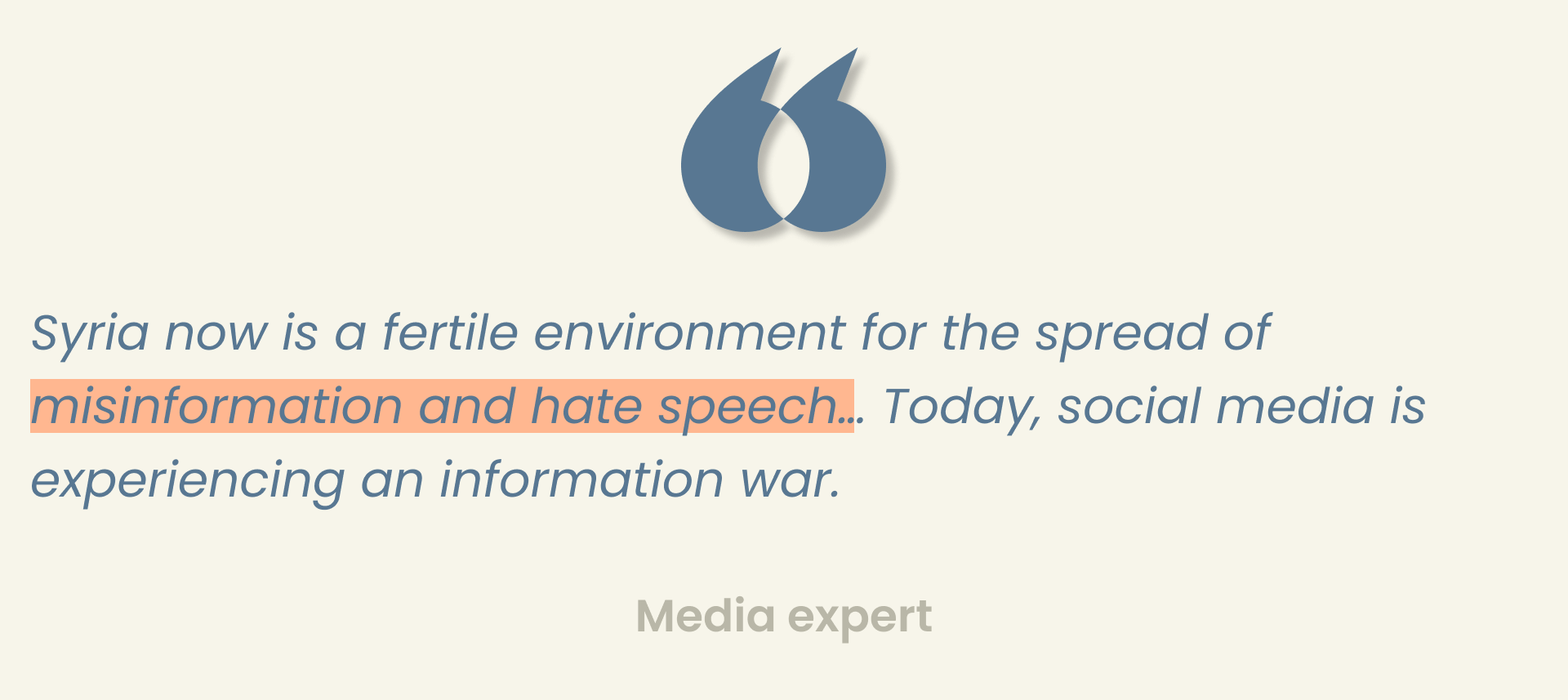
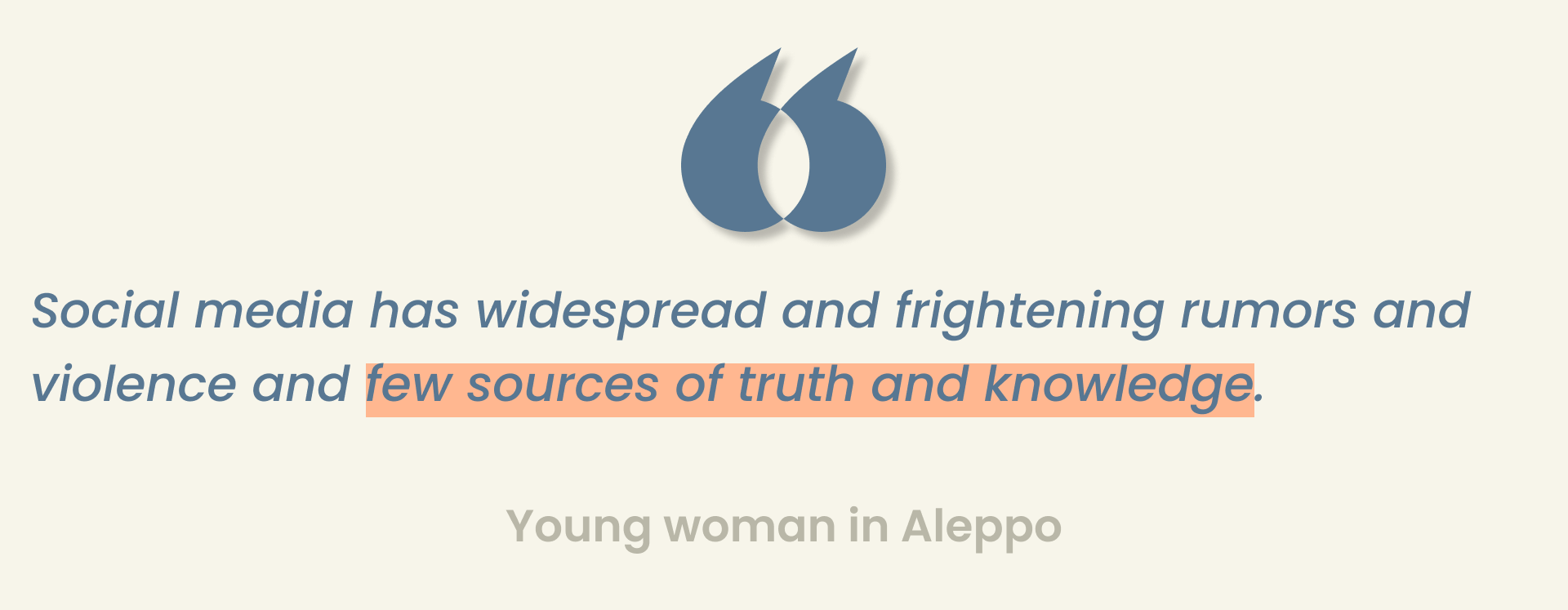
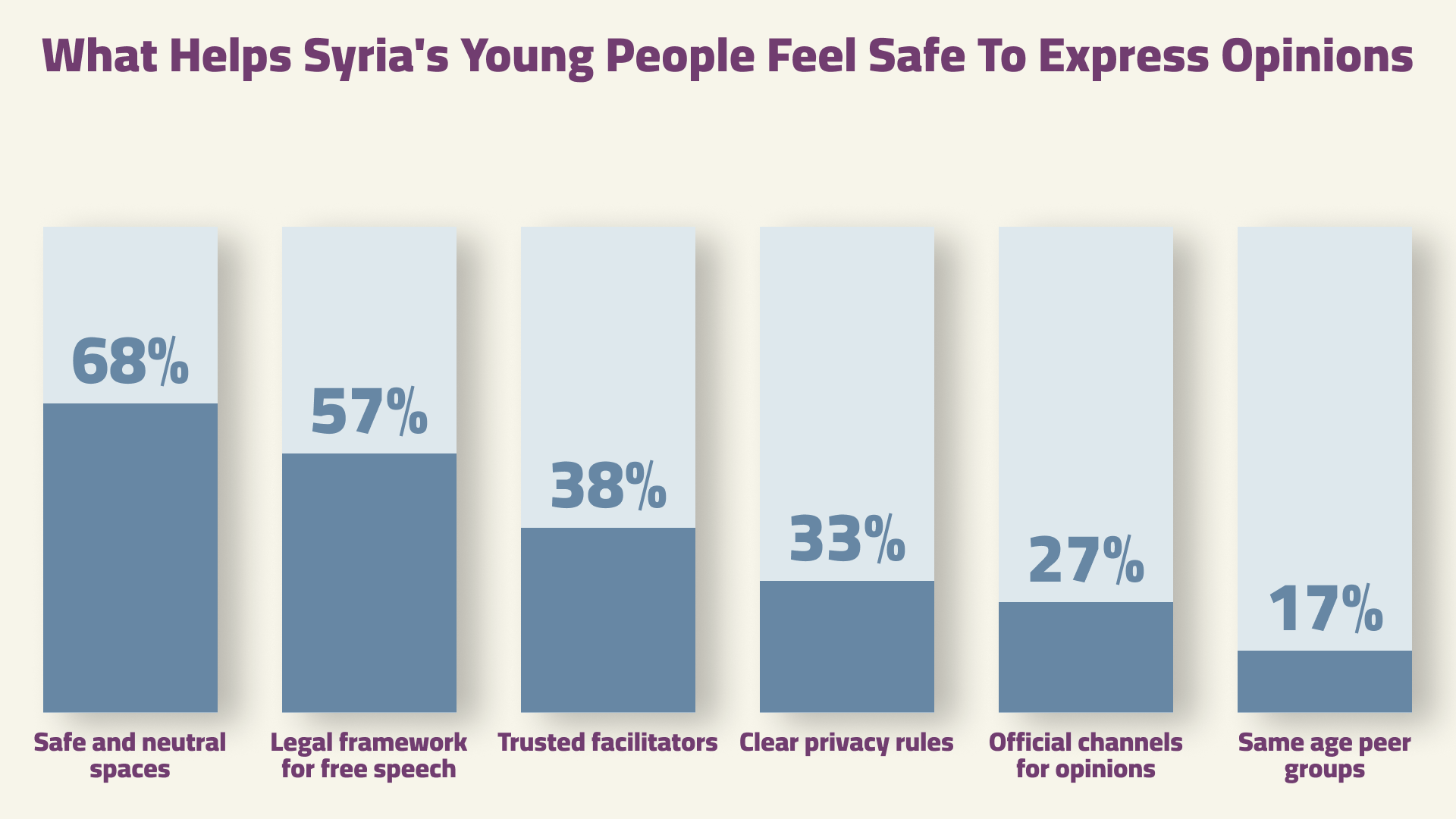
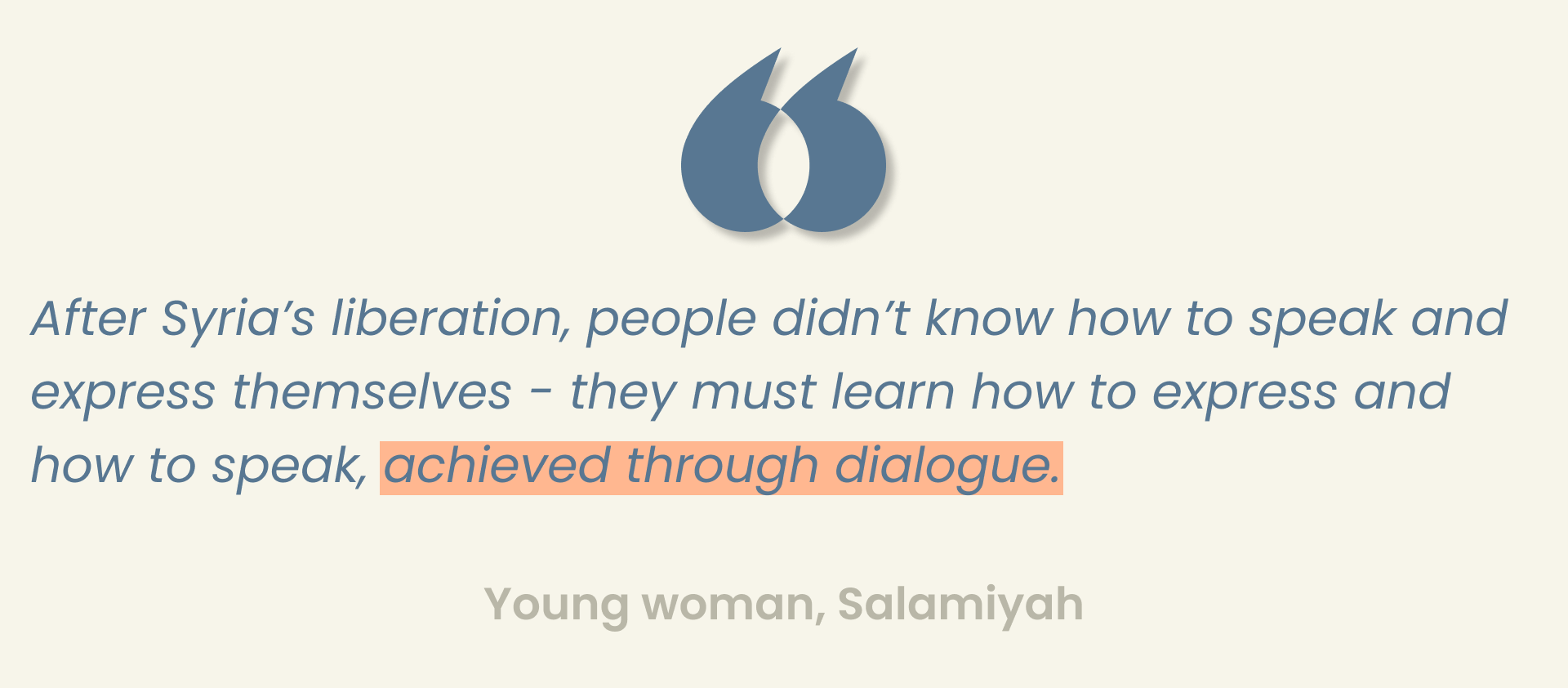
Concerns around freedom of expression, in particular, feature prominently. 68% of our survey respondents say they need safe, neutral spaces to be able to express their opinions freely and 57% cite the need for a legal framework for free speech. Although the fall of the Assad regime ostensibly removed some of the most severe constraints on expression, the opening of the information space in Syria has entailed a surge of misinformation and polarising content. For a generation that engages heavily with social media and social media activism, this maelstrom of mis-and disinformation presents a serious challenge as young people try to form and shape informed opinion about the transition and their country’s future.
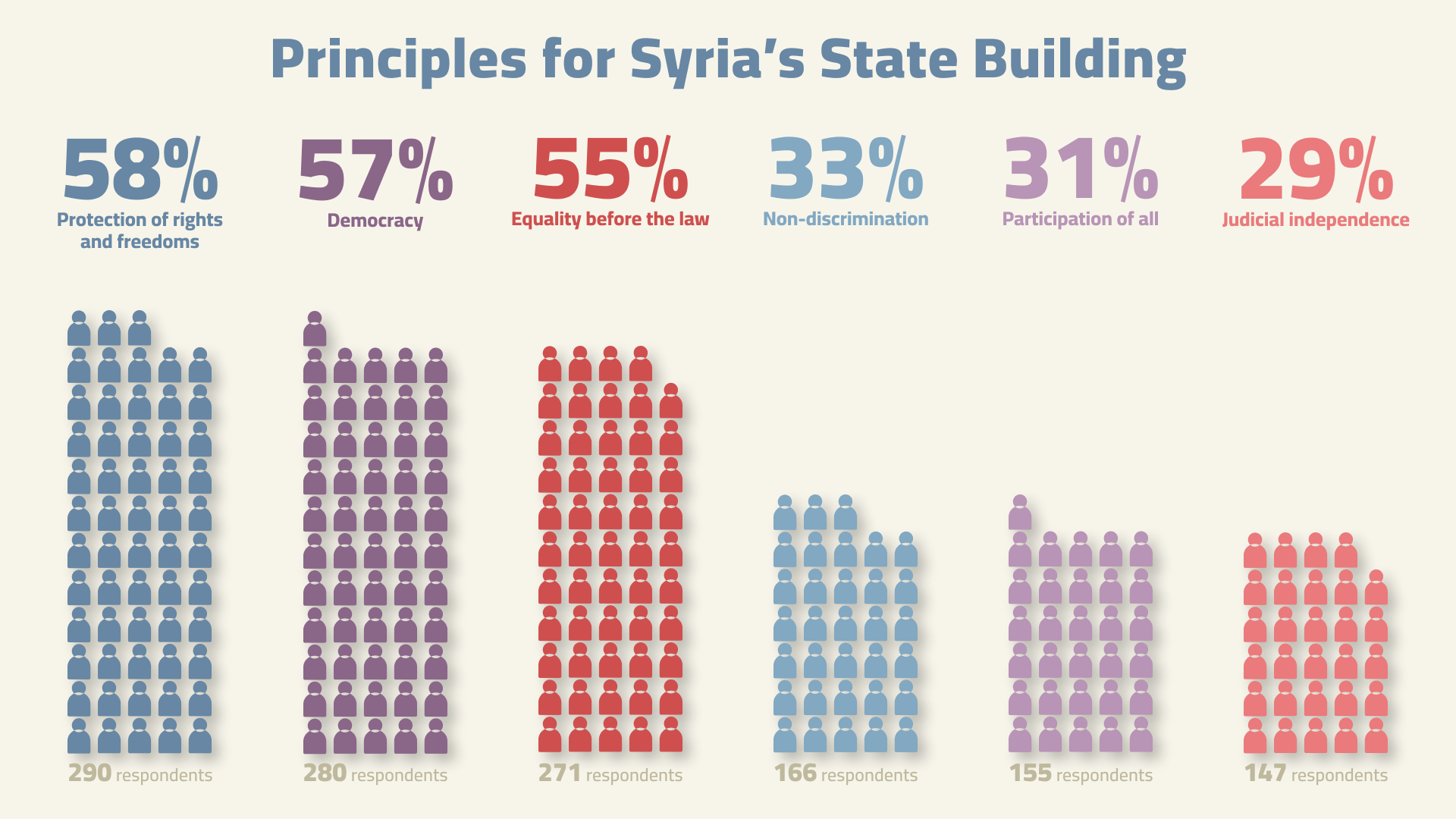
Source: Online survey of 502 young Syrians aged 18-35 (respondents could select up to five answers)
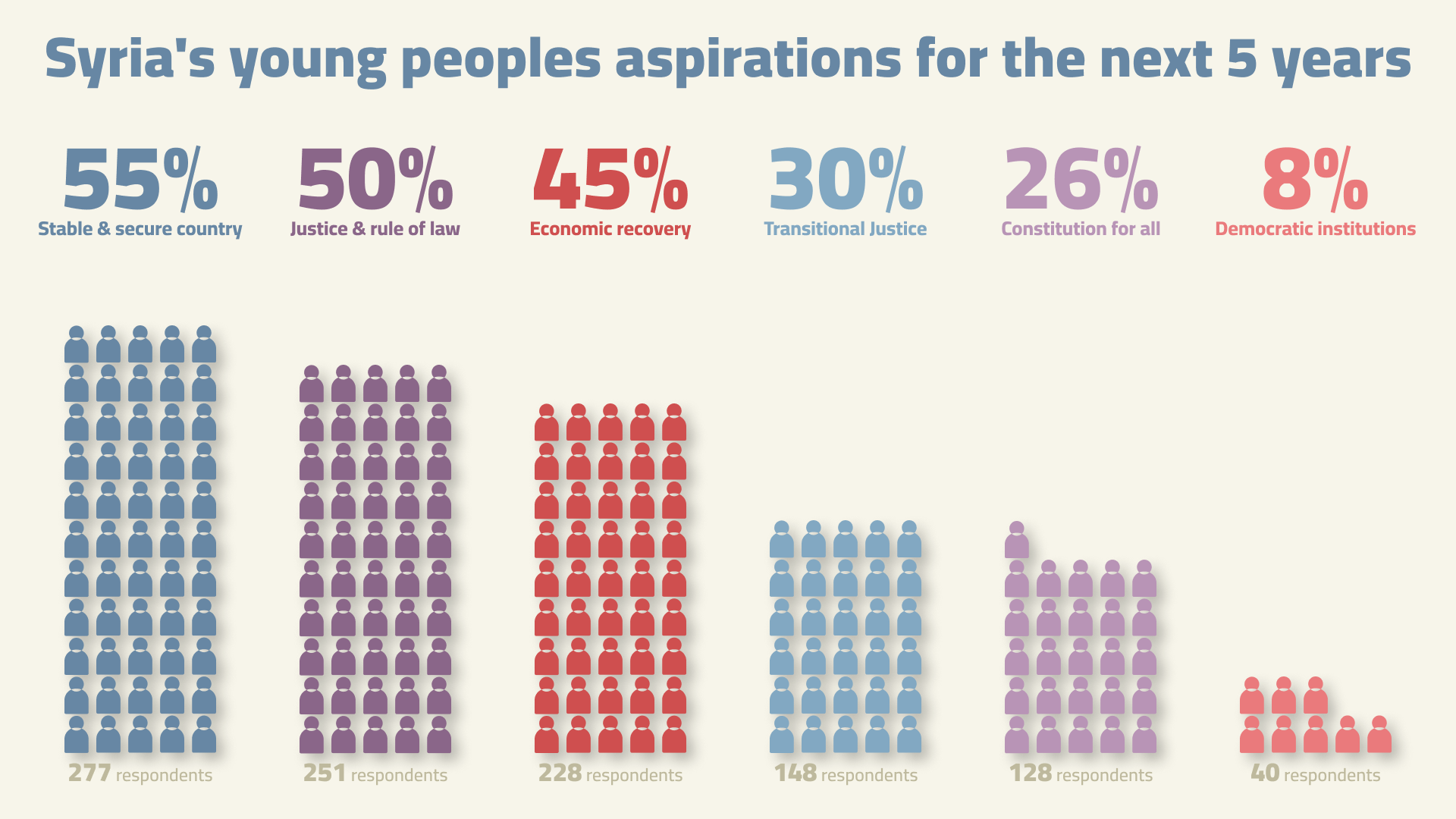
Source: Online survey of 502 young Syrians aged 18-35 (respondents could select up to three answers)
Justice and accountability
Syrian young people see justice and accountability as a non-negotiable stepping stone to a peaceful future. 50% say that justice and the rule of law is their primary aspiration for the next 5 years and 30% cite the implementation of transitional justice as their top priority.

What is transitional justice?
When a society seeks to come to terms with a legacy of conflict, repression, violations and abuses, they turn to a range of processes and mechanisms to ensure accountability, serve justice and achieve reconciliation. This process is known as transitional justice.
It may include judicial and non-judicial mechanisms, such as truth-seeking, reparations, prosecutions and measures to prevent recurrence of violations. It often includes constitutional, legal and institutional reform, the preservation of archives, the strengthening of civil society, memorialisation and cultural initiatives and the reform of history education. Transitional justice aims to give recognition to victims and to rebuild trust between citizens and the state. It reinstates respect for human rights and the rule of law and is a vital step in the journey towards reconciliation.
It’s clear from our research that the concept of accountability – of ending a dominant culture of impunity in Syria – and seeing people brought to justice for their actions is hugely important. When asked about their understanding of transitional justice, 64% of young people cite holding perpetrators to account. This suggests that attempts at reconciliation without accountability are likely to lack credibility and to face significant resistance.
Safety and stability

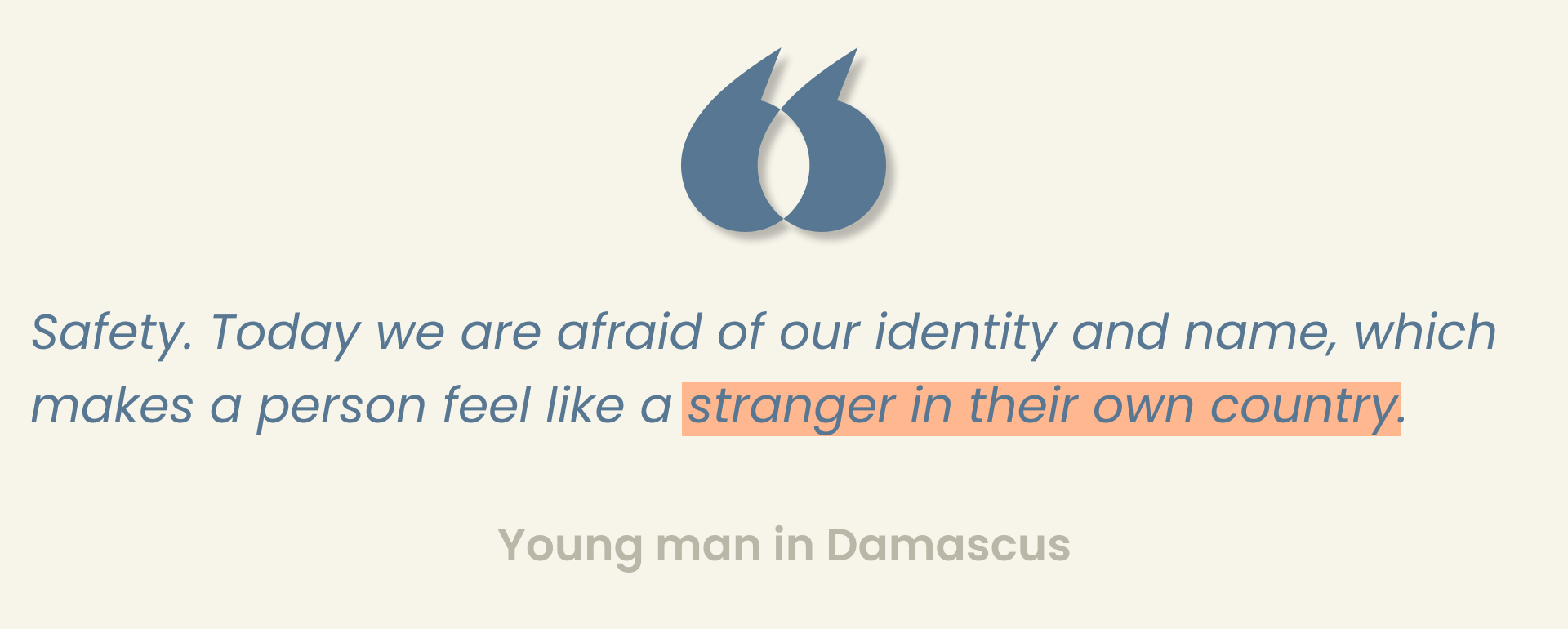
Young Syrians are clear that safety and stability are the prerequisites for a more hopeful future. A stable and secure country was the top pick at 55% when young people in Syria were asked about their hopes for the next five years. Interestingly, by comparison, those living in the diaspora gave the implementation of transitional justice, guaranteed rights, freedoms and transparency slightly higher priority, possibly because they face less ongoing direct danger.
Inside Syria, our research revealed that security concerns differ significantly across regions. They are particularly palpable in Sweida with more than 89% of respondents there identifying it as their primary concern and 71% in Quneitra. In coastal areas where minorities, including Alawi communities, face deeply disturbing, documented violence throughout 2025, the response was also high at 69%.
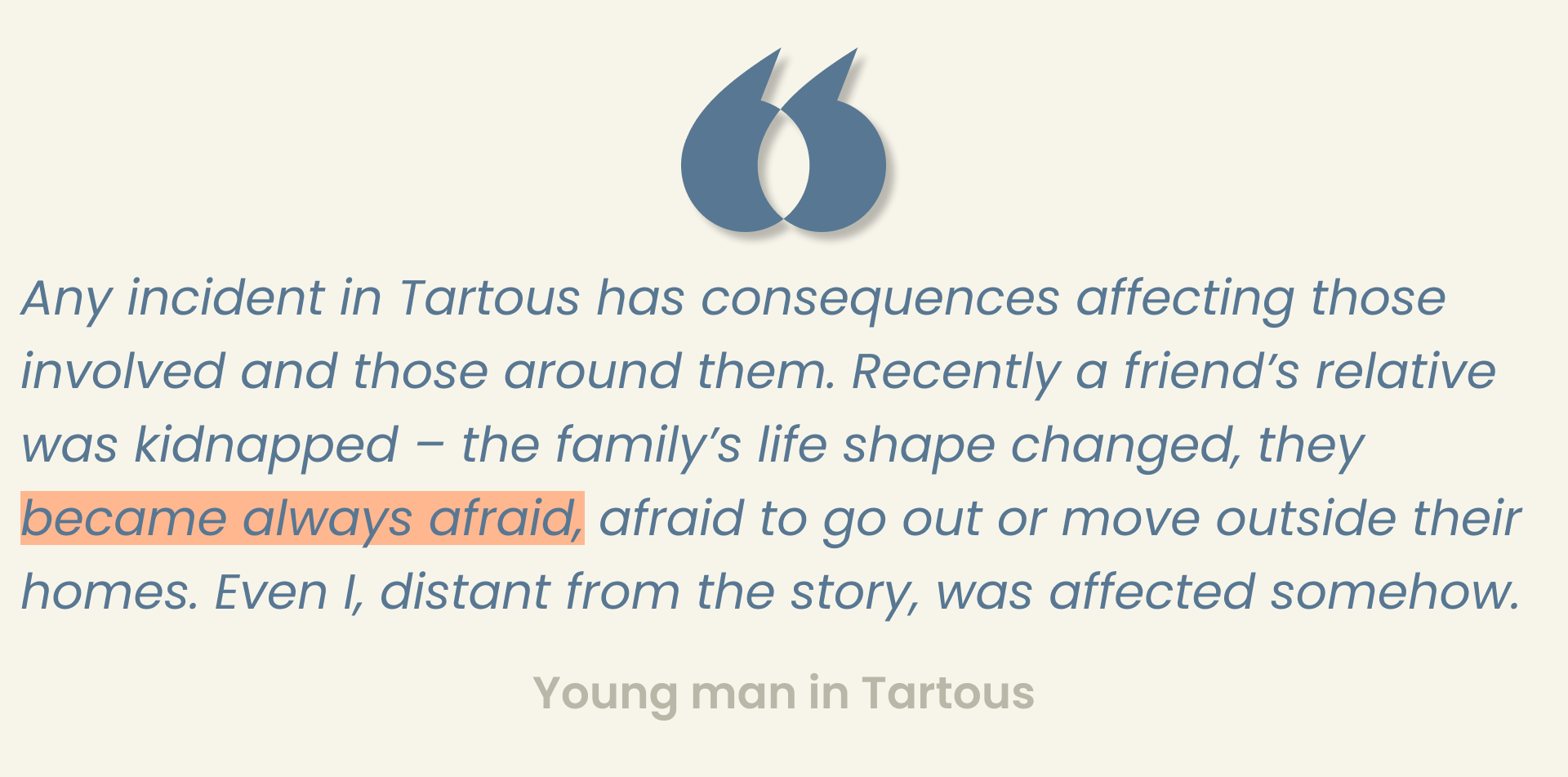
Young people in areas such as Tartous, one of the coastal regions engulfed in a wave of violence in March 2025, face a complex combination of security fears, heightened by ongoing kidnappings and profound uncertainty about how to interact with the transitional authorities.

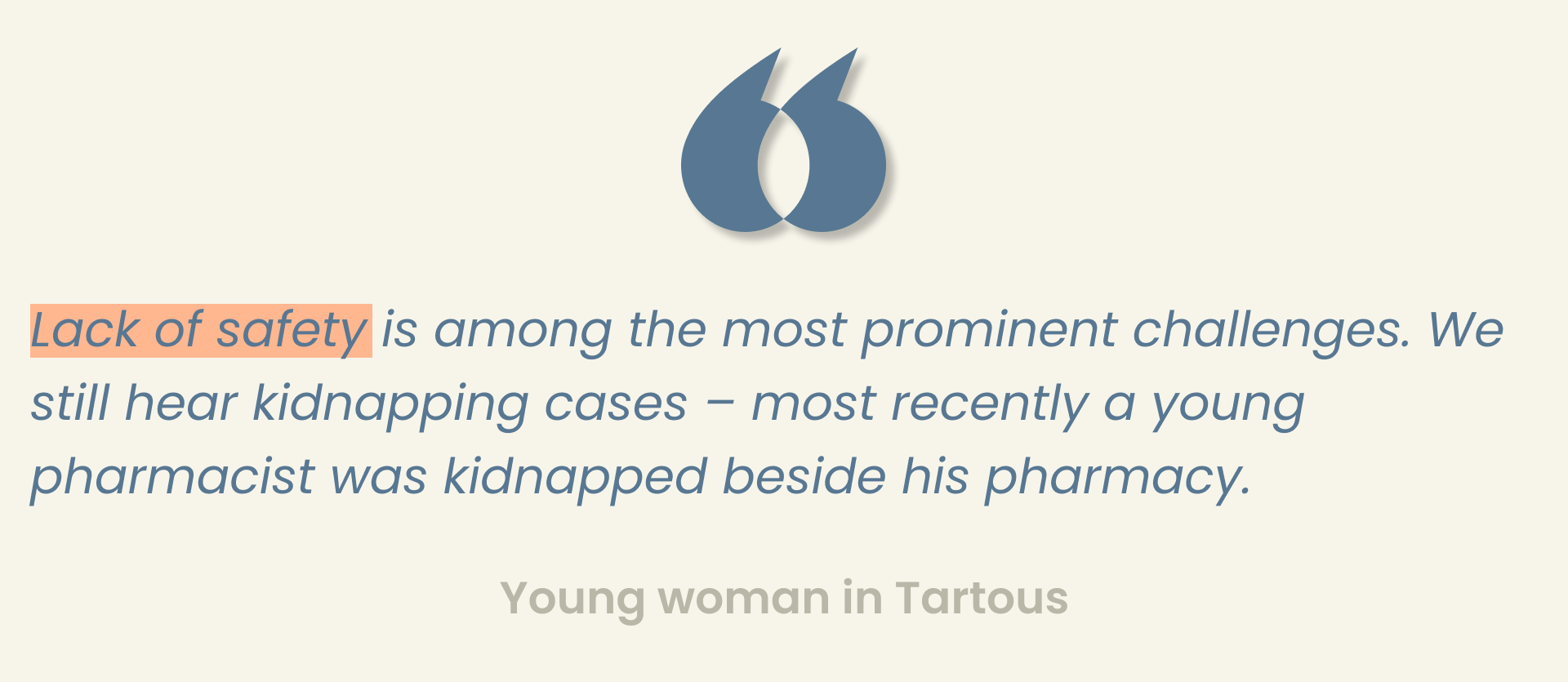

Security
Since the Assad regime fell in late 2024, waves of violence have punctuated the transitional government’s first 18 months in office. In early 2025, shocking violence including members of the interim government’s forces, engulfed coastal and western central Syria. Primarily targeting Alawite communities, the violence culminated in massacres in early March that killed close to 1,400 people, mainly civilians, and displaced tens of thousands.

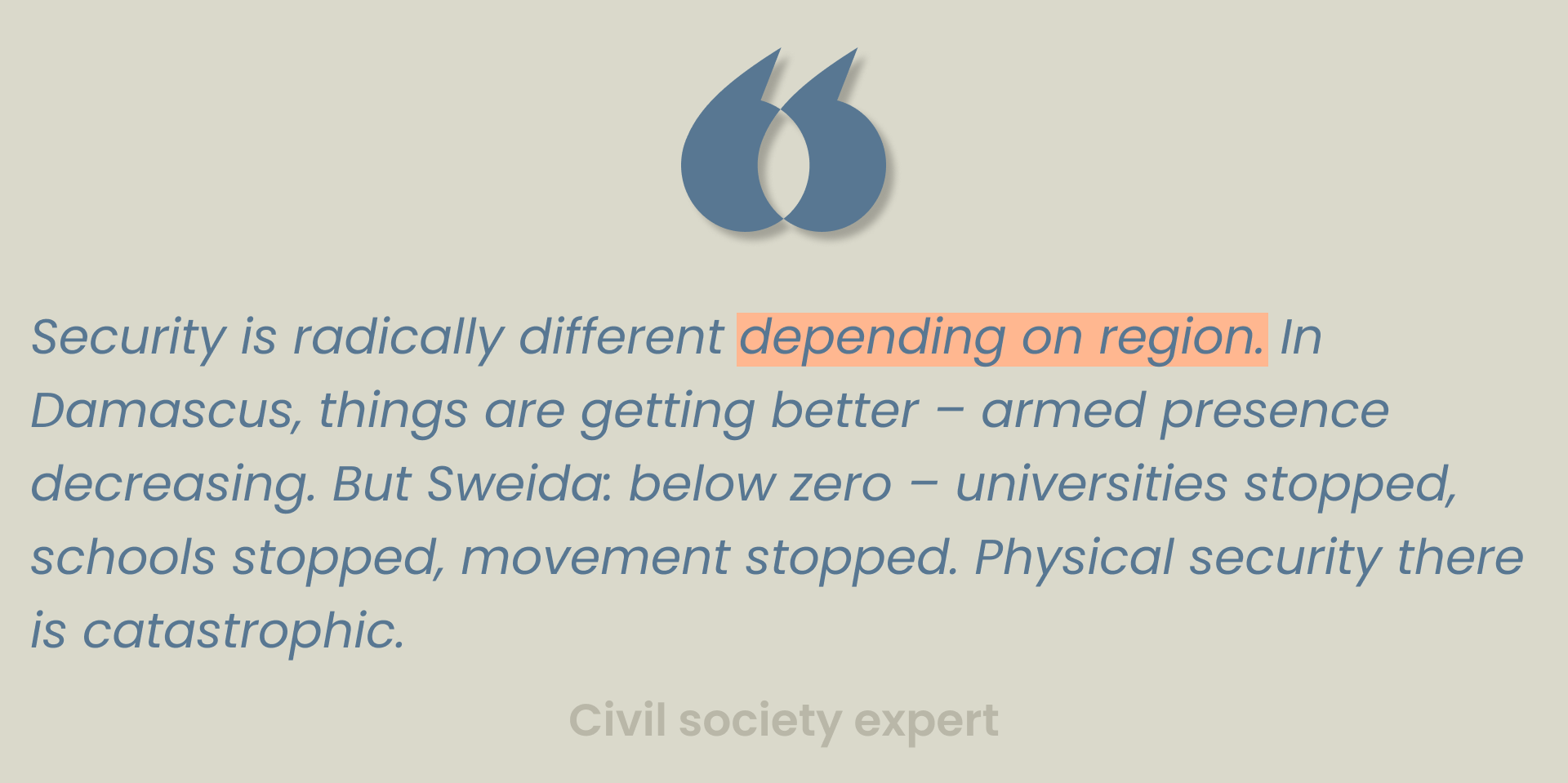
In Sweida, in Southern Syria, young people are experiencing a complete breakdown of normal life. In July 2025, more than 1,700 people were killed, mainly Druze civilians and also from the Bedouin community, in Sweida by government forces, and armed groups. The violence involved summary killings, abductions and mass displacement. Young people described the fear of being killed on the basis of their identity.
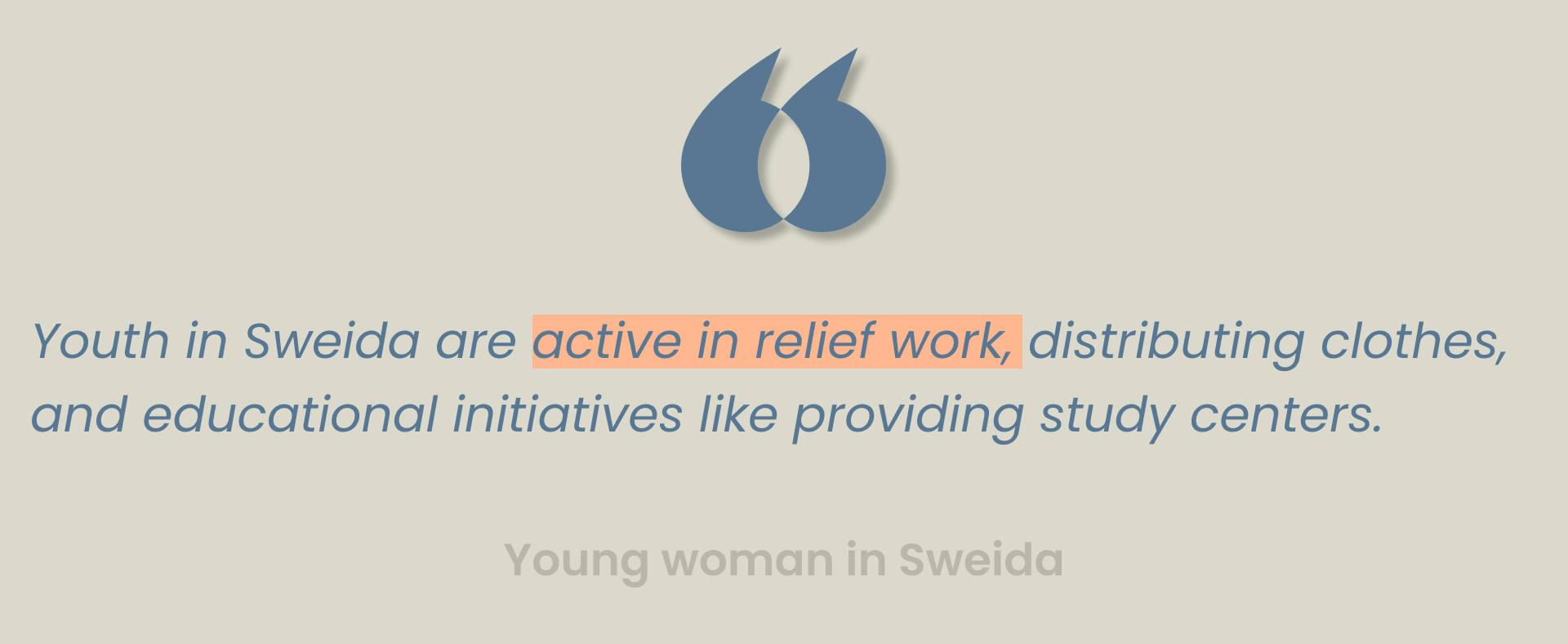
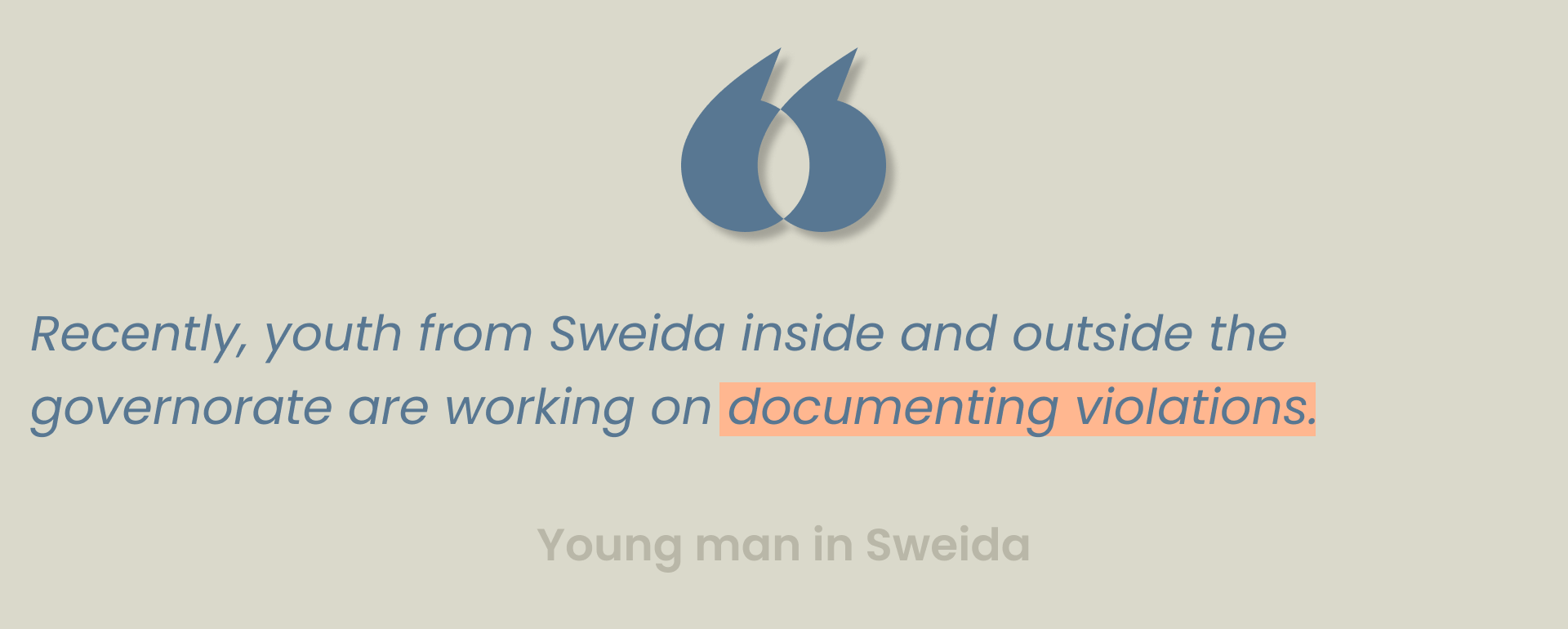
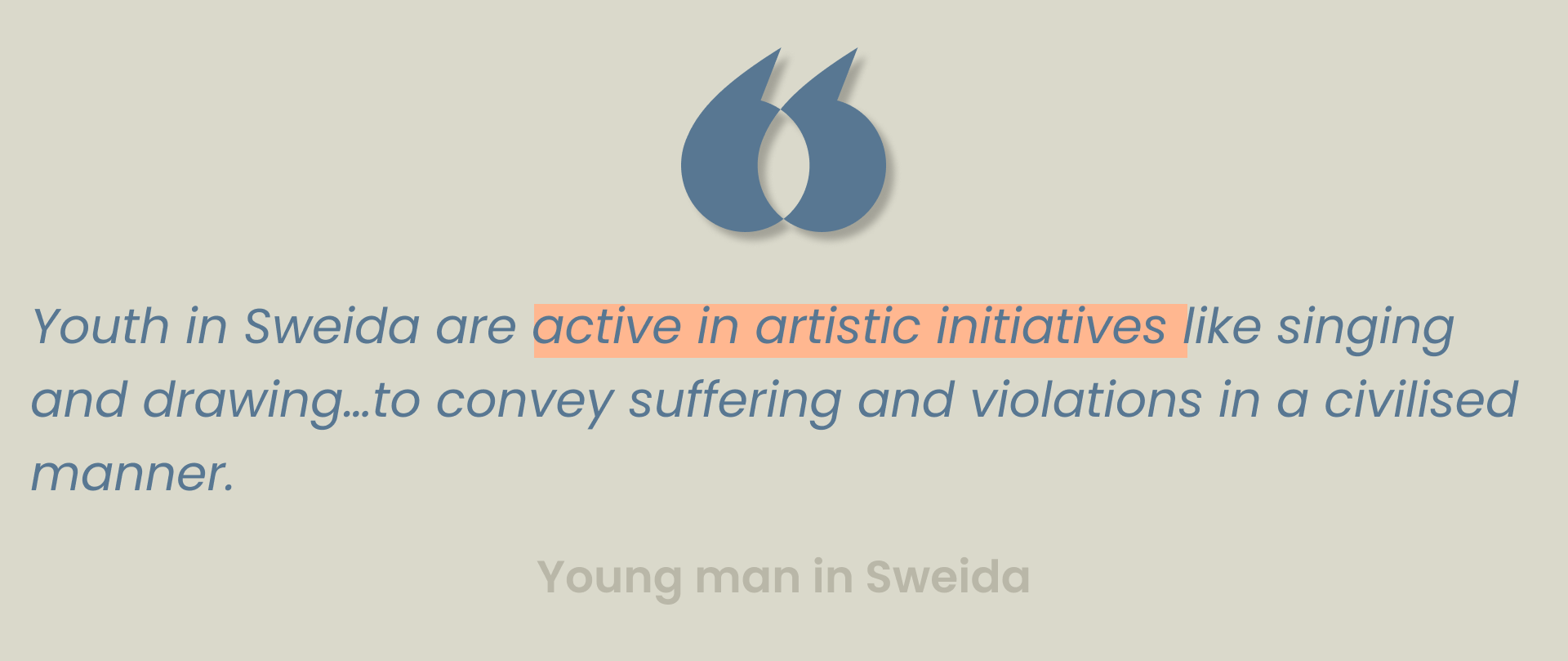
Despite this, remarkably, we also found that young people in the region remain engaged in trying to improve life in their communities, whether through relief and documentation efforts or through cultural, heritage or artistic activities.


In January 2026, Syrian military forces rapidly gained control of large areas of northeast Syria previously held by the Syrian Democratic Forces (SDF). Reports of serious violence against civilians, in particular Kurdish residents, are beginning to emerge amidst a destabilising torrent of disinformation.
Participation
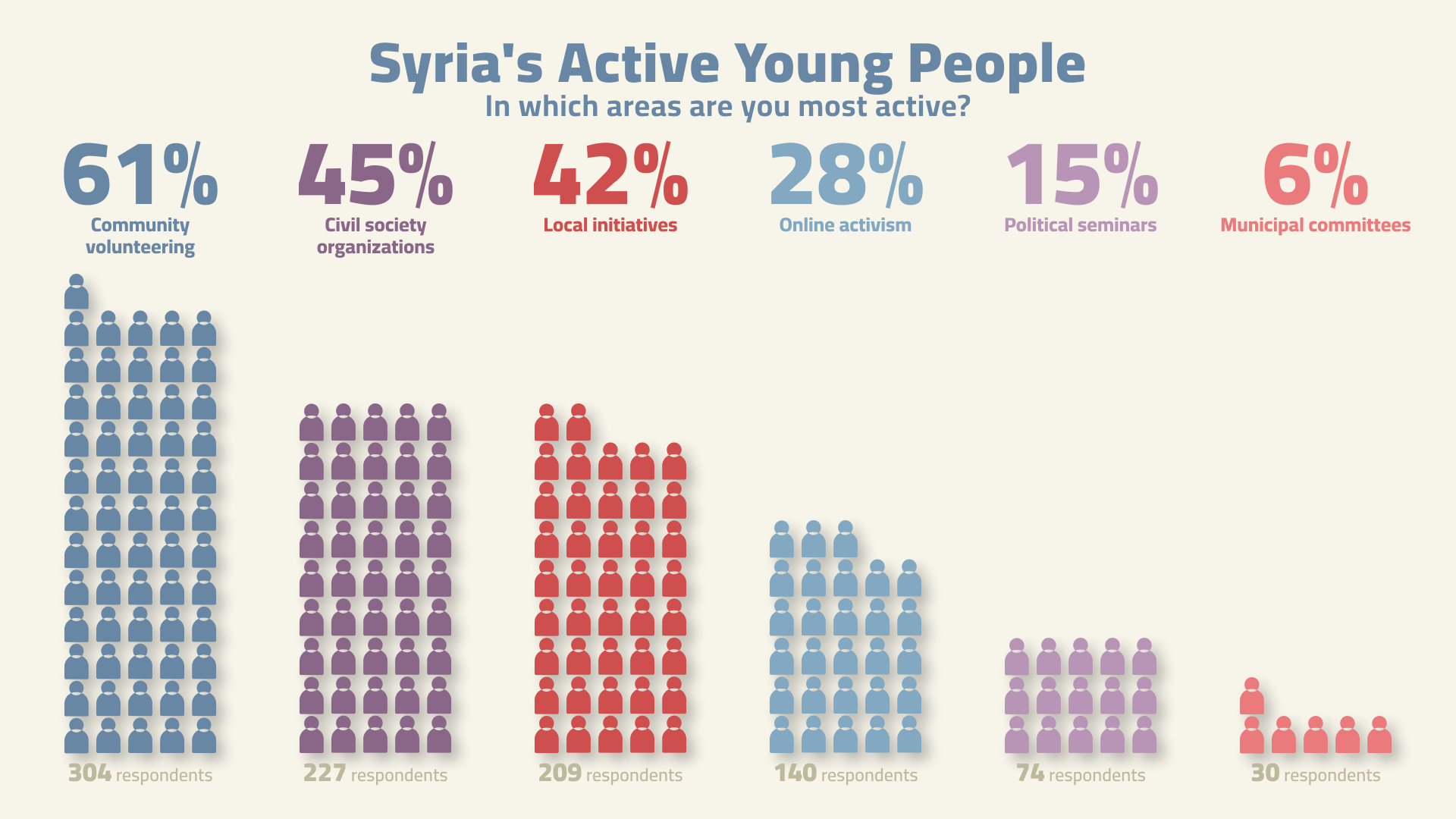
Given the ongoing violence – or threat of violence – they face, coupled with their desperate economic outlook, it is truly remarkable to discover that 61% of young people in Syria are involved in community volunteering, that 45% engage with civil society organisations and that 28% participate in online activism. Their energy and desire to make a tangible, positive contribution in the face of adversity is hugely significant for Syria’s future.
It’s clear that young people want to participate in building a new future for their communities and for their country. But it is important to note that their current participation is heavily concentrated in civil society and largely absent from more formal political spaces. In fact, 51% of young people say they have no engagement at all with official authorities.
Civil society organisations in Syria benefit from years of earned trust. When asked which information sources they trust the most, young people ranked civil society organisations at the top, on a par with friends and family and far higher than official platforms, local authorities or traditional media. Trust in government, institutions and official authorities will need to be rebuilt over time with proactive efforts made to encourage meaningful youth participation.
Young people in Syria remain more hopeful about the potential of participation than those living in the diaspora: 30% of those in Syria see participation as ‘useless’ versus 44% of those in the diaspora. This is perhaps because young Syrians in the diaspora feel more disconnected in terms of their ability to enact meaningful change.
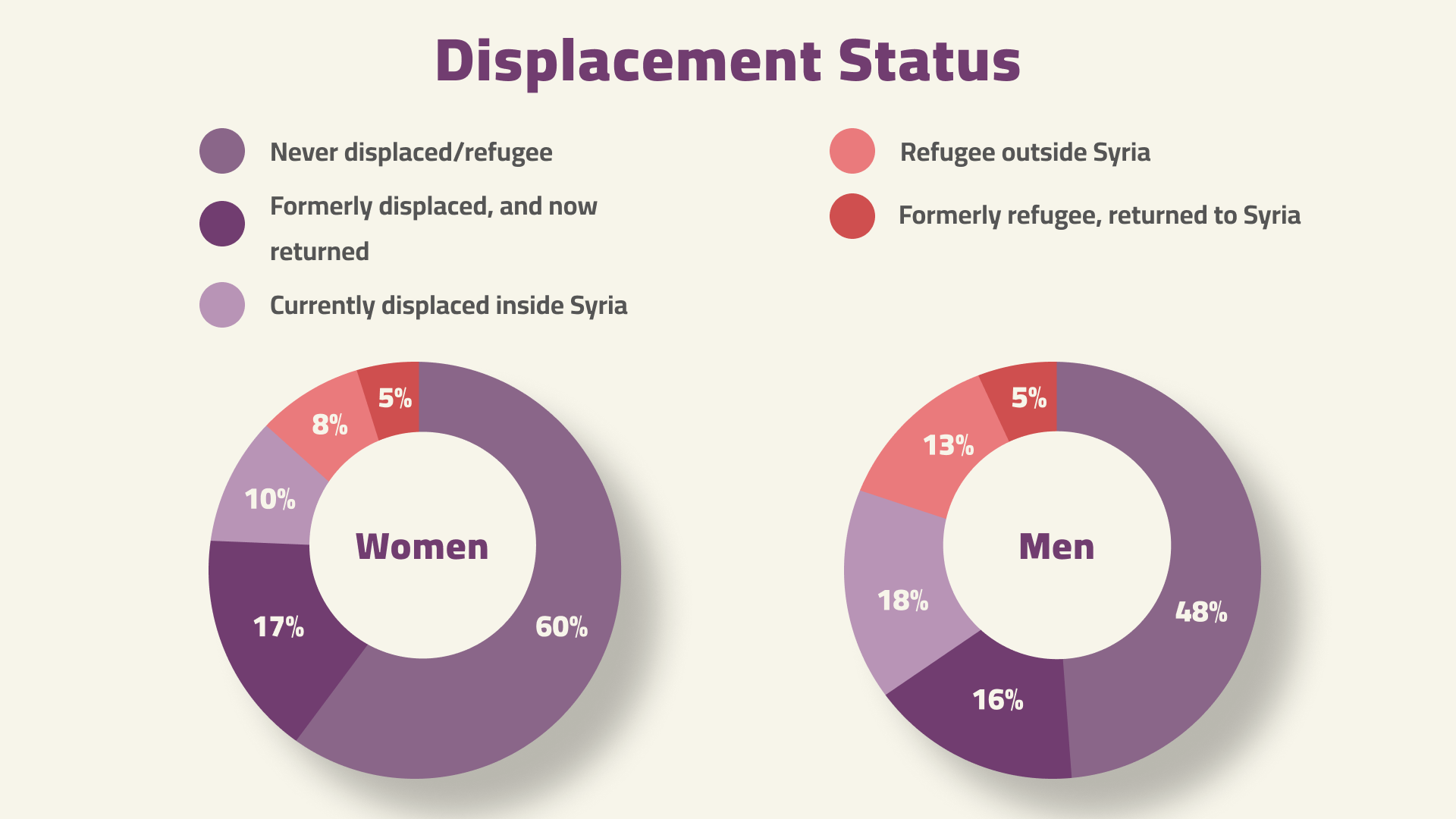
Interestingly, displacement within Syria appears to mobilise rather than marginalise those keen to participate in civic and political life. Survey respondents who have been, or are currently, internally displaced show higher participation levels: 50% compared to 37% of those never displaced. Only 9% of internally displaced young people say they have never participated in civic life. Those displaced inside Syria also believe participation matters – only 25% characterise it as ‘useless’ compared to 35% of those who have never been displaced – but they also show greater fear of its potential consequences.

Source: Online survey of 502 young Syrians aged 18-35 (respondents could select up to three answers)
Barriers to Realising the Vision


Source: Online survey of 502 young Syrians aged 18-35
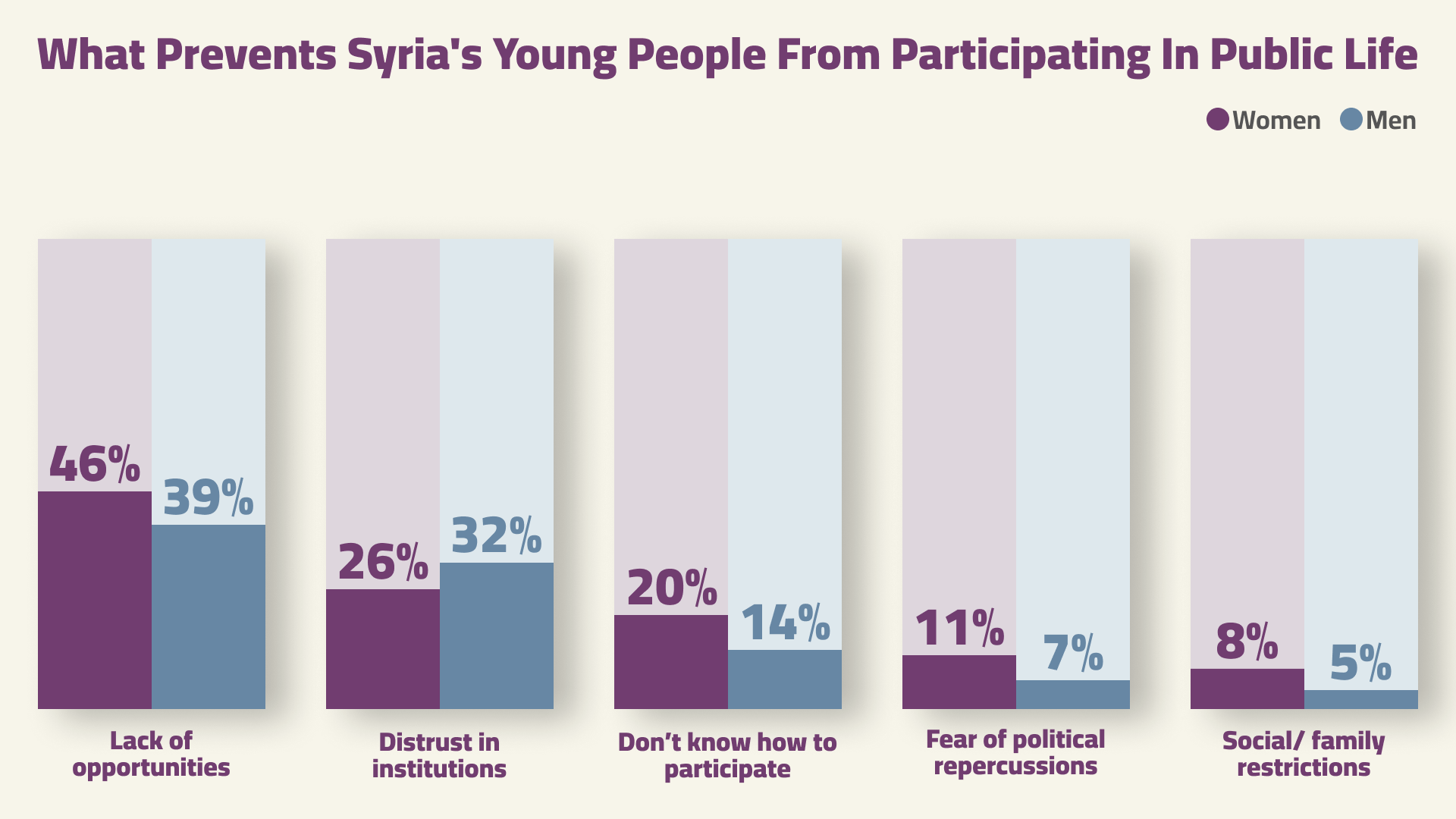
Source: Online survey of 502 young Syrians aged 18-35 (respondents could select up to three answers)
It’s clear from our research that young people have a vision for Syria – a vision of economic renewal, of a rights-based society, of accountability and security – and that they long to play their part in turning that vision into reality. But, it’s also clear that their capacity to do so is severely limited by a number of key factors:
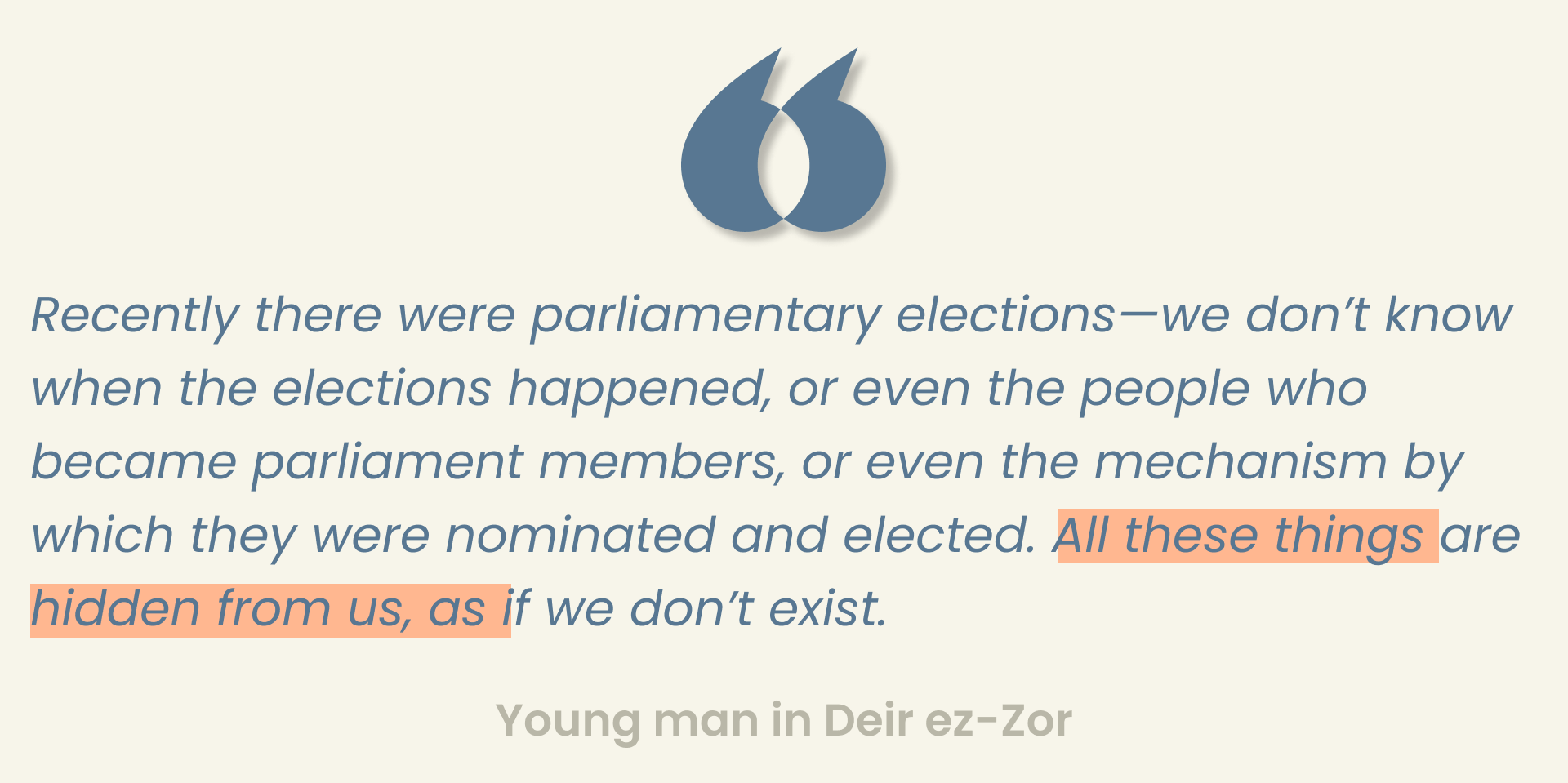
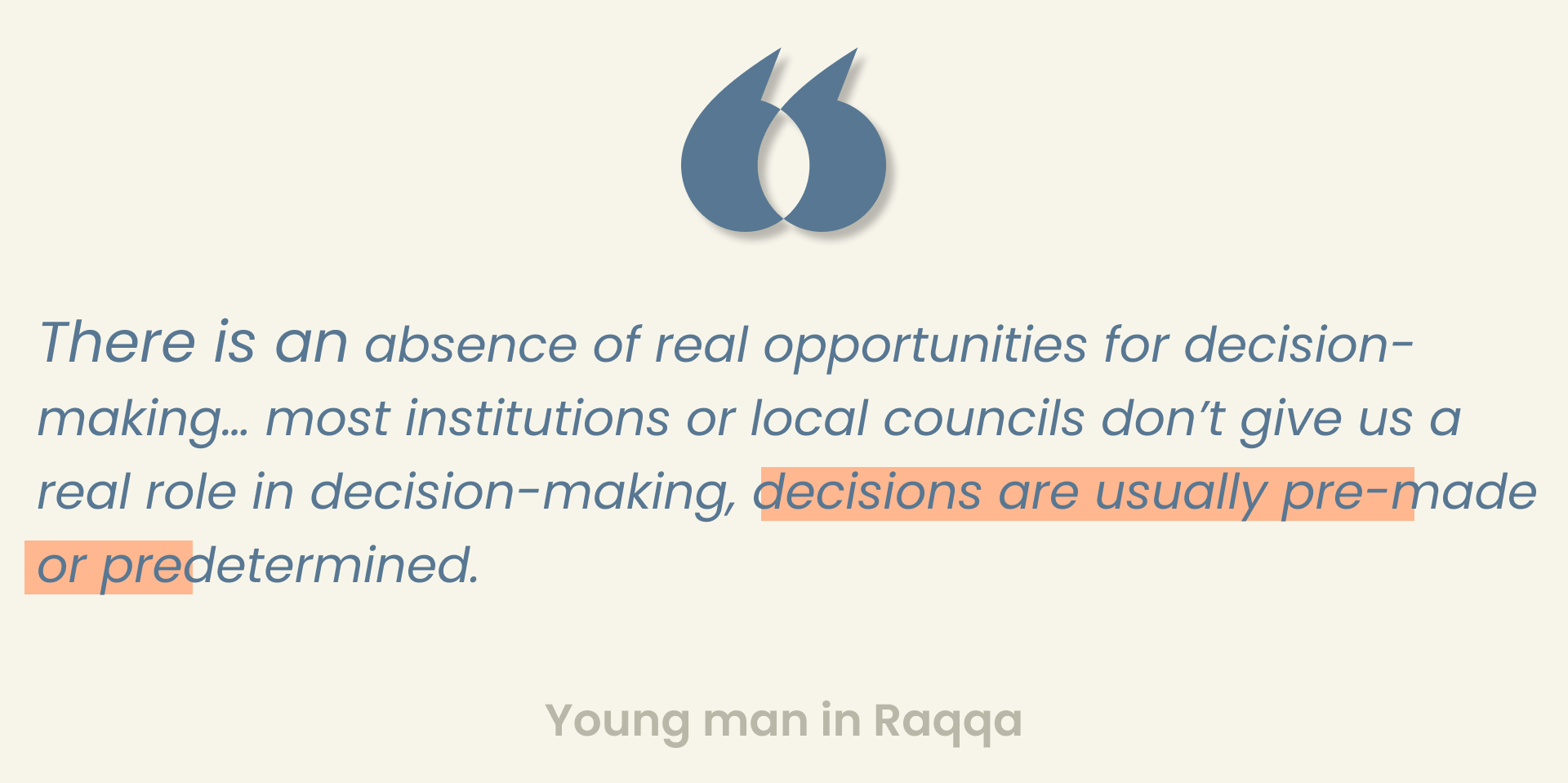
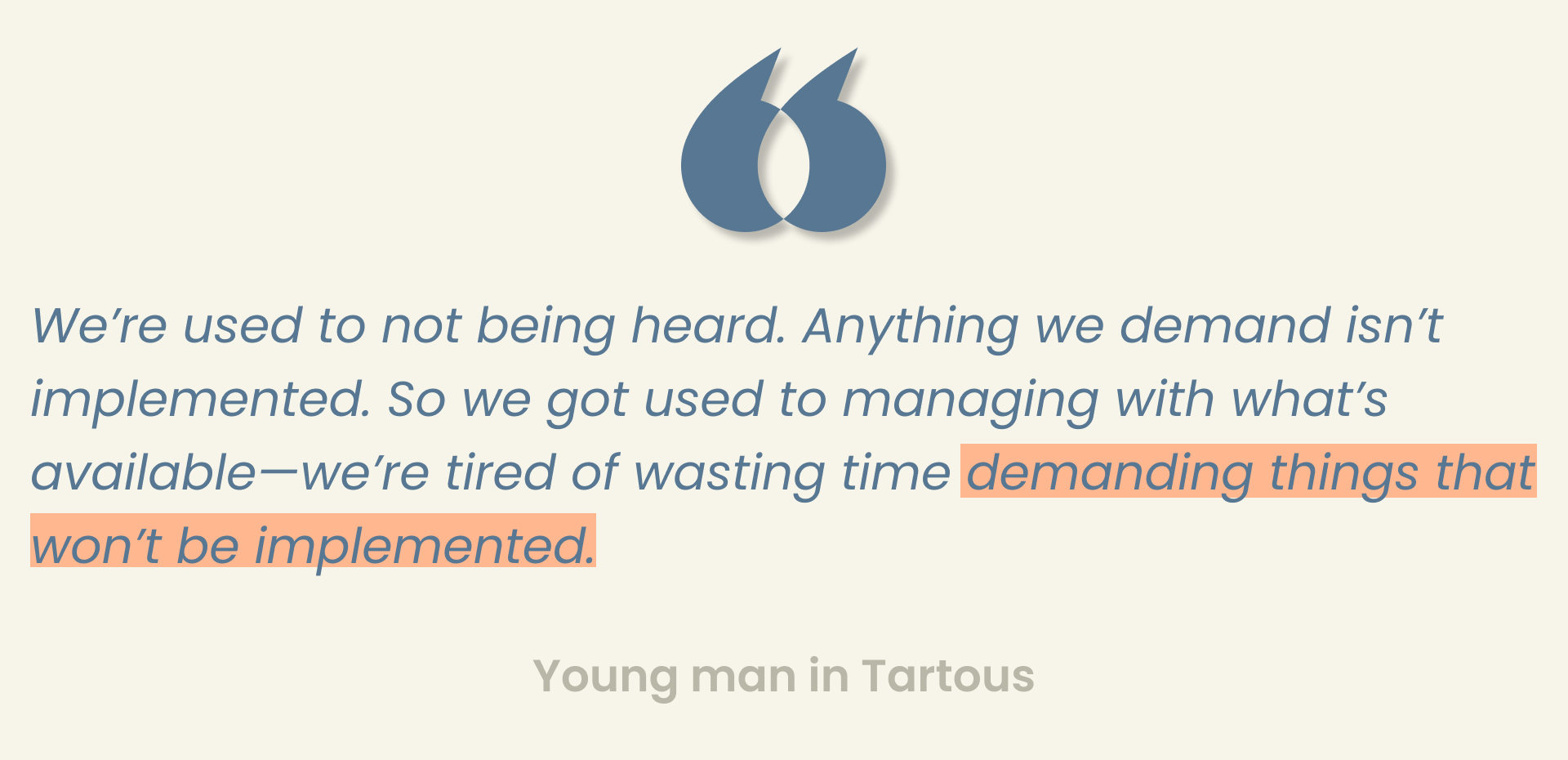
Being shut out of decision-making
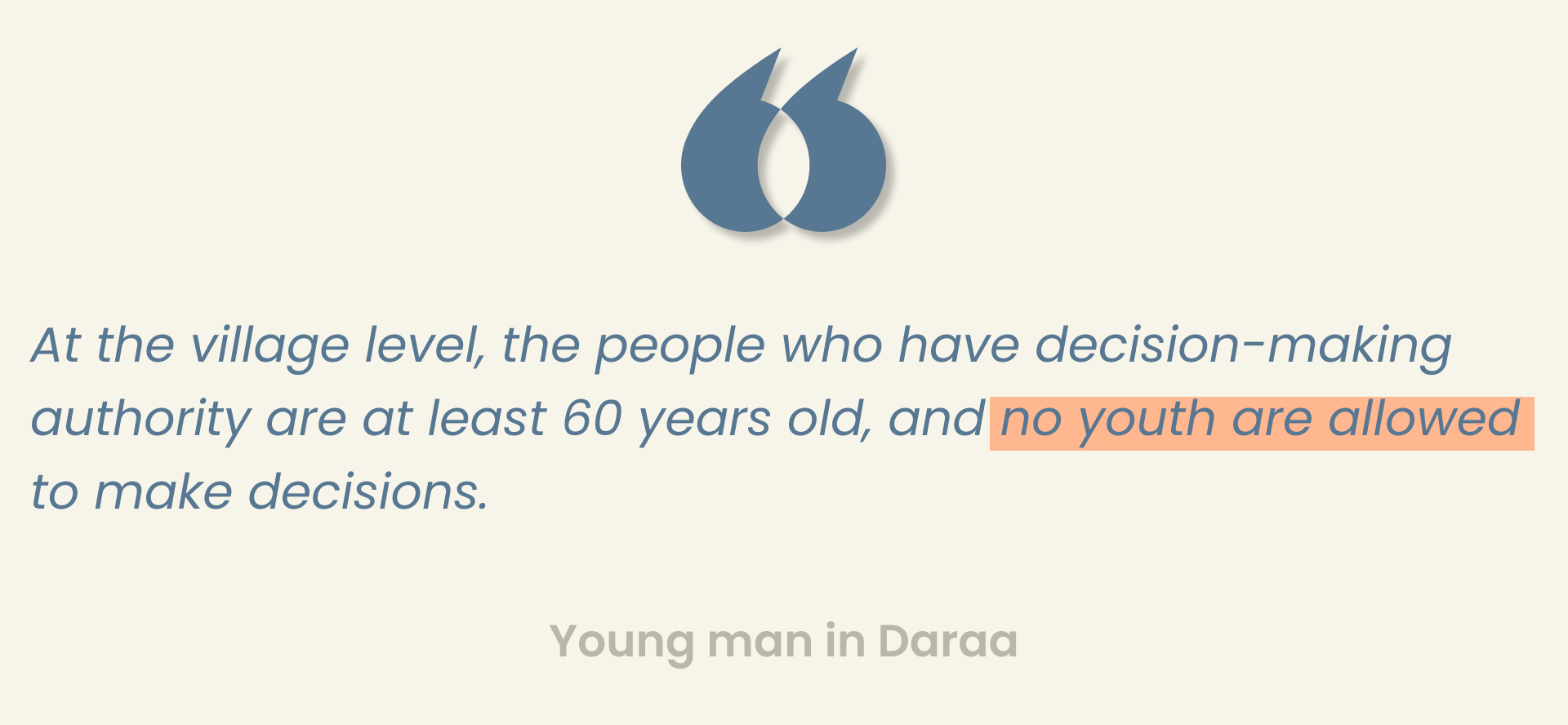
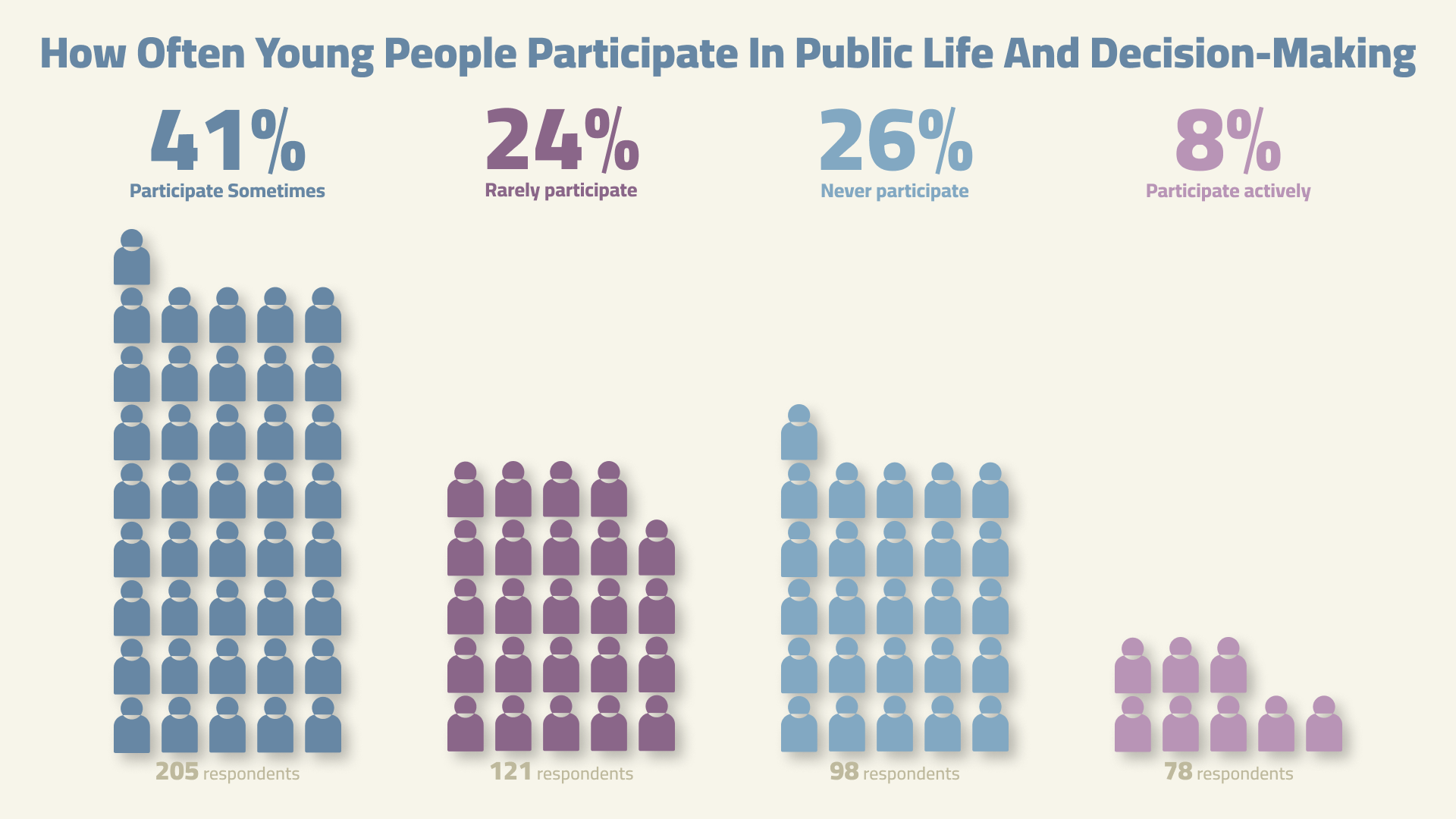
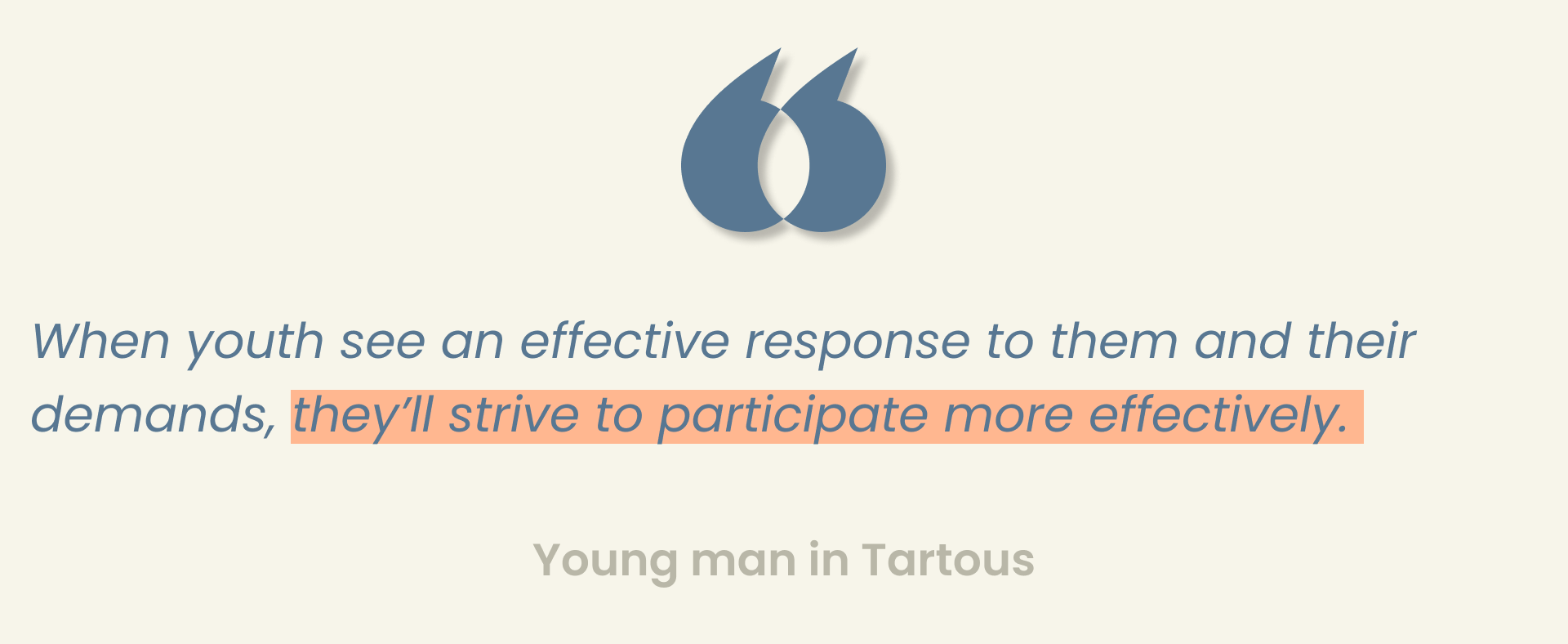
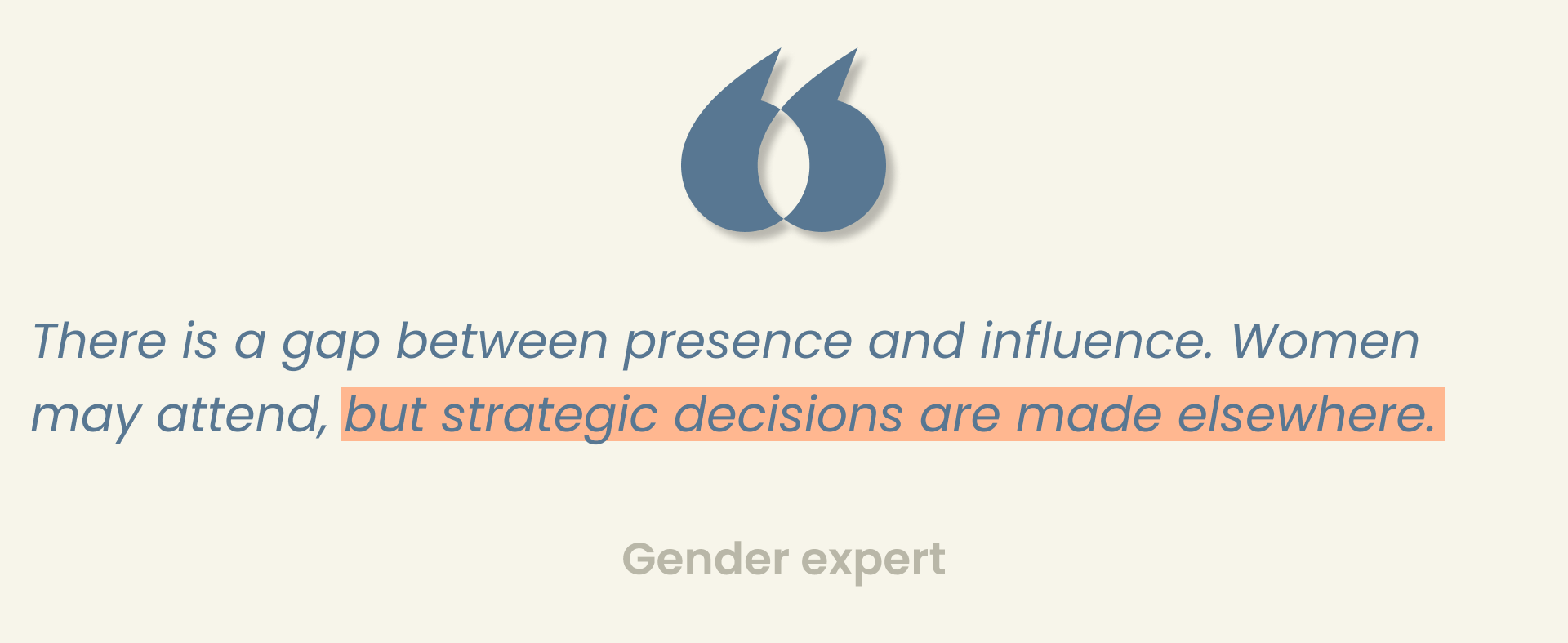
There is a difference between participation and decision-making. We captured a widespread frustration amongst young people that they ‘participate without deciding’. Despite their high social engagement with community and civic organising, only 16% of young people said they are active in decision-making in public life, 51% say they have zero engagement with official authorities and 32% believe participation is ‘useless’.
This is a generation that believes deeply in the potential and power of civic action, but has lost faith in more formal political processes. Their remarkable civic energy is channelled almost exclusively through grassroots activities while remaining conspicuously absent from more formal structures.

Fear
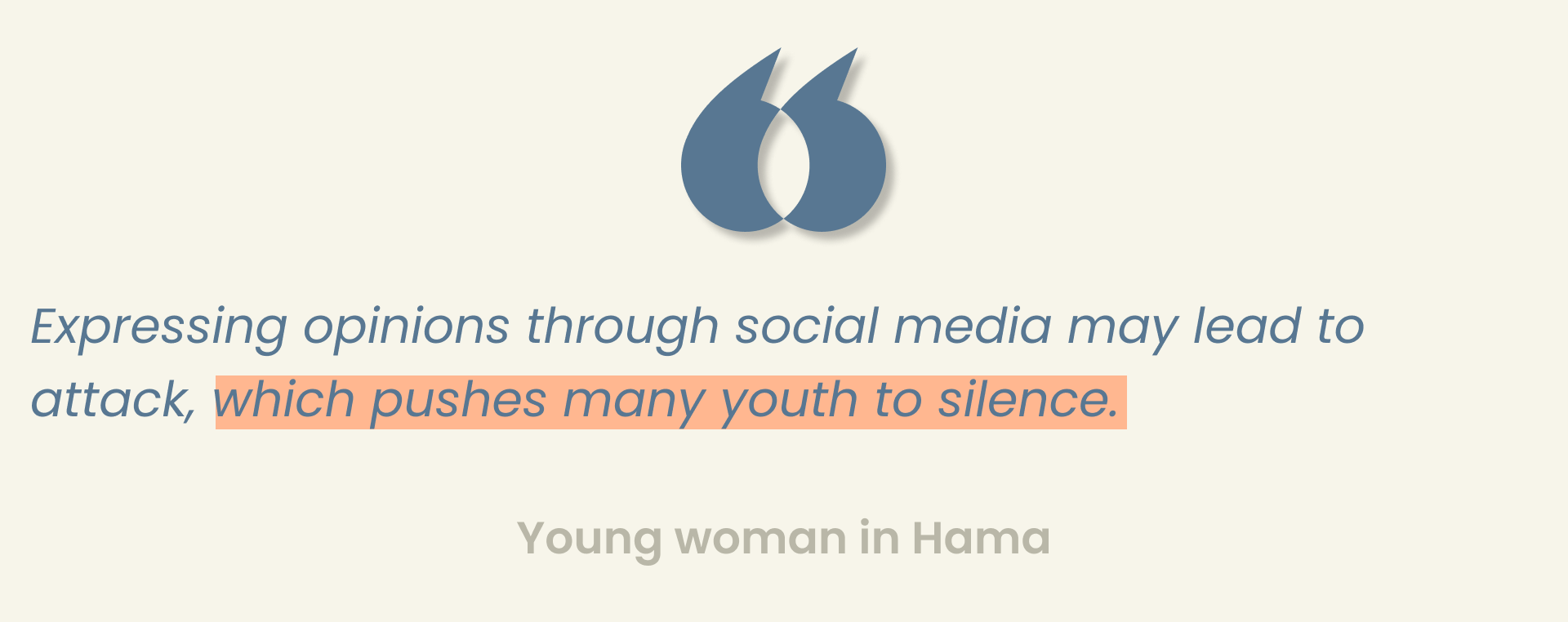
Understandably, given all that they have endured and the uncertainty they continue to face, fear is a major barrier for young people. However much they may want to take proactive steps towards realising their vision, Syrian youth are afraid: they fear violence and social judgement; they fear the potential negative consequences of searching for information or of participating in public life; and they fear mis- and disinformation and online abuse. Until physical and psychological safety in the country improves, the capacity of young people to enact positive change will remain limited.


Economic pressure
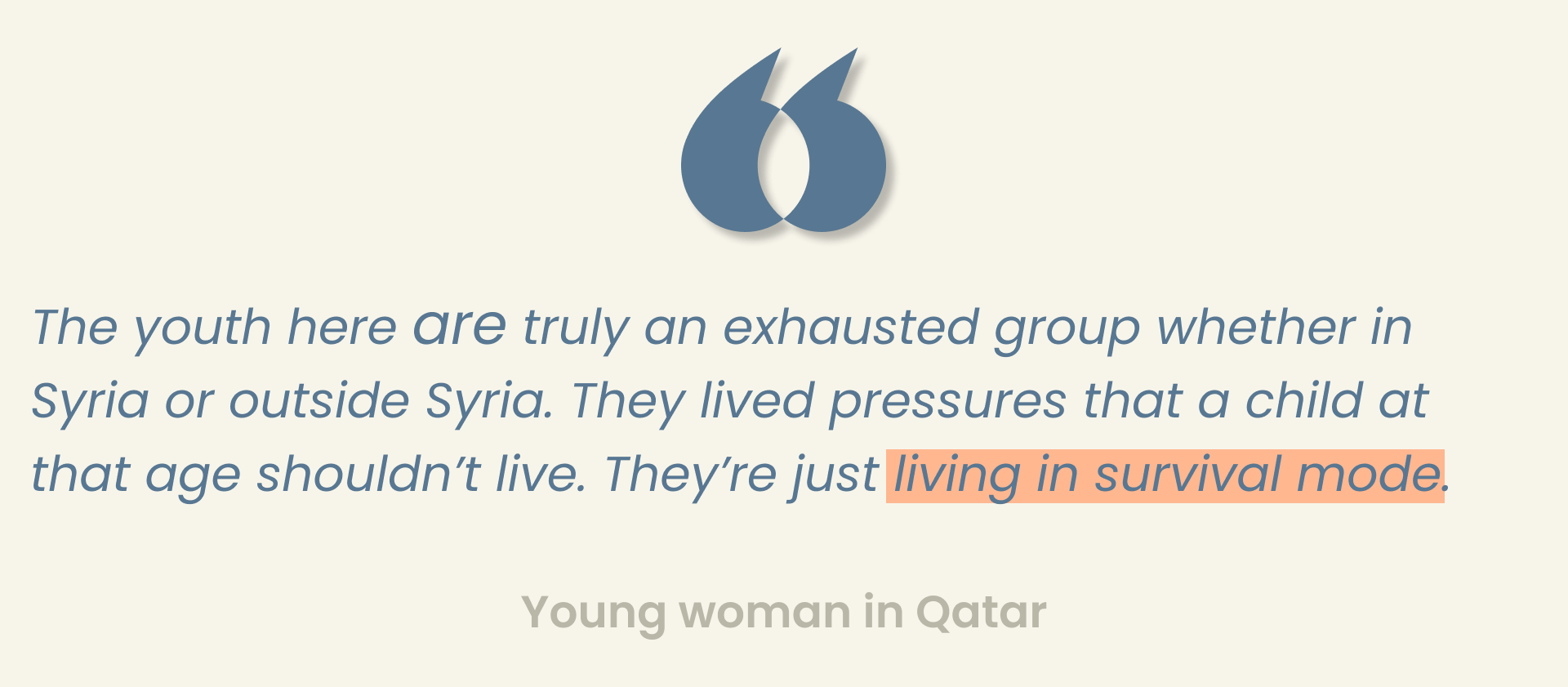
In early 2026, more than 9 million people in Syria are food insecure and 14 million are without access to clean water, sanitation and electricity.
In the hierarchy of needs, day to day survival will always take precedence. When survival is a struggle, significant energy, creativity and agency is diverted away from everything else. Economic pressures in Syria remain so dominant for the majority, that the ability of young people to participate in anything else is greatly reduced.

Gender discrimination
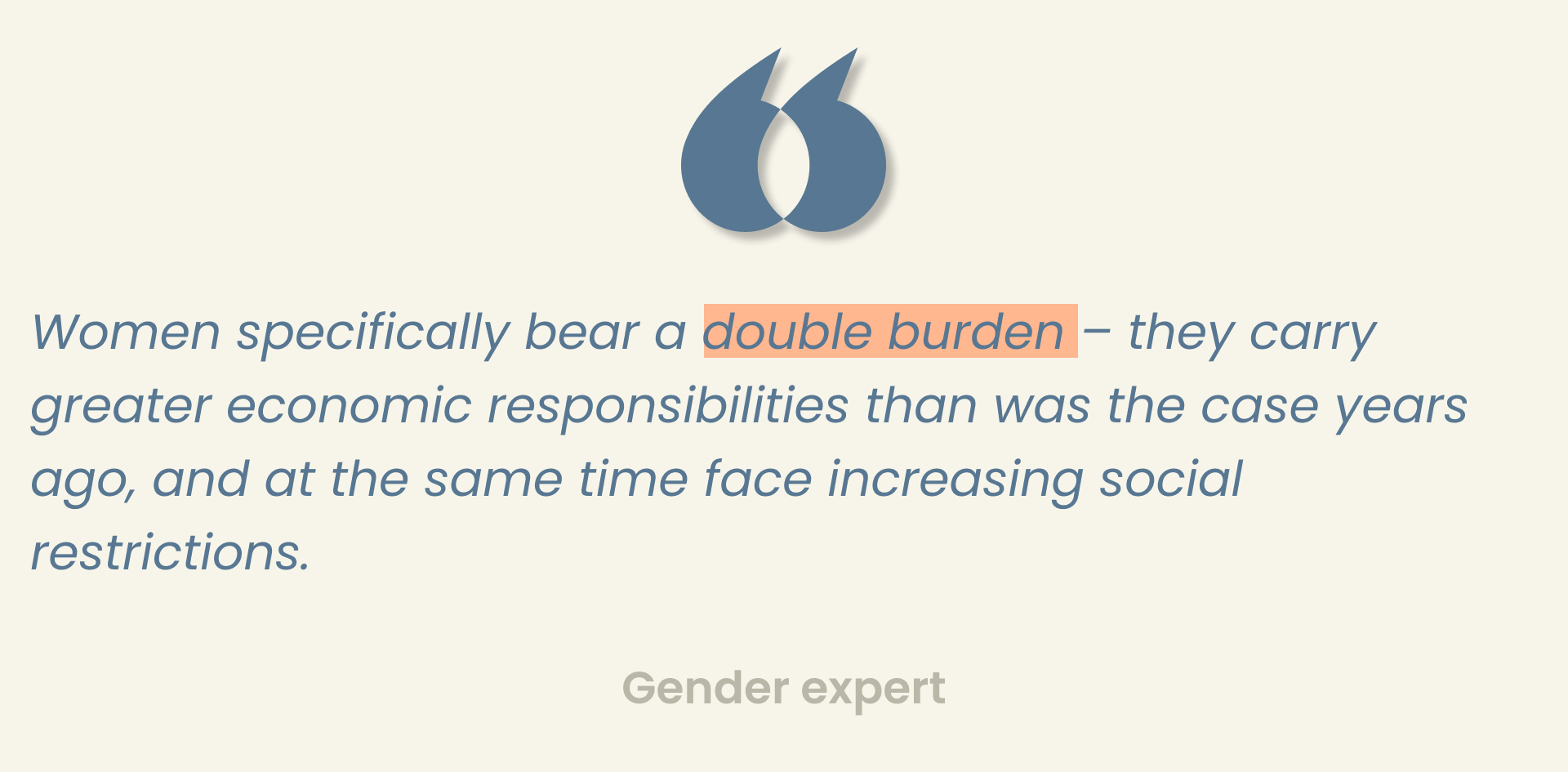
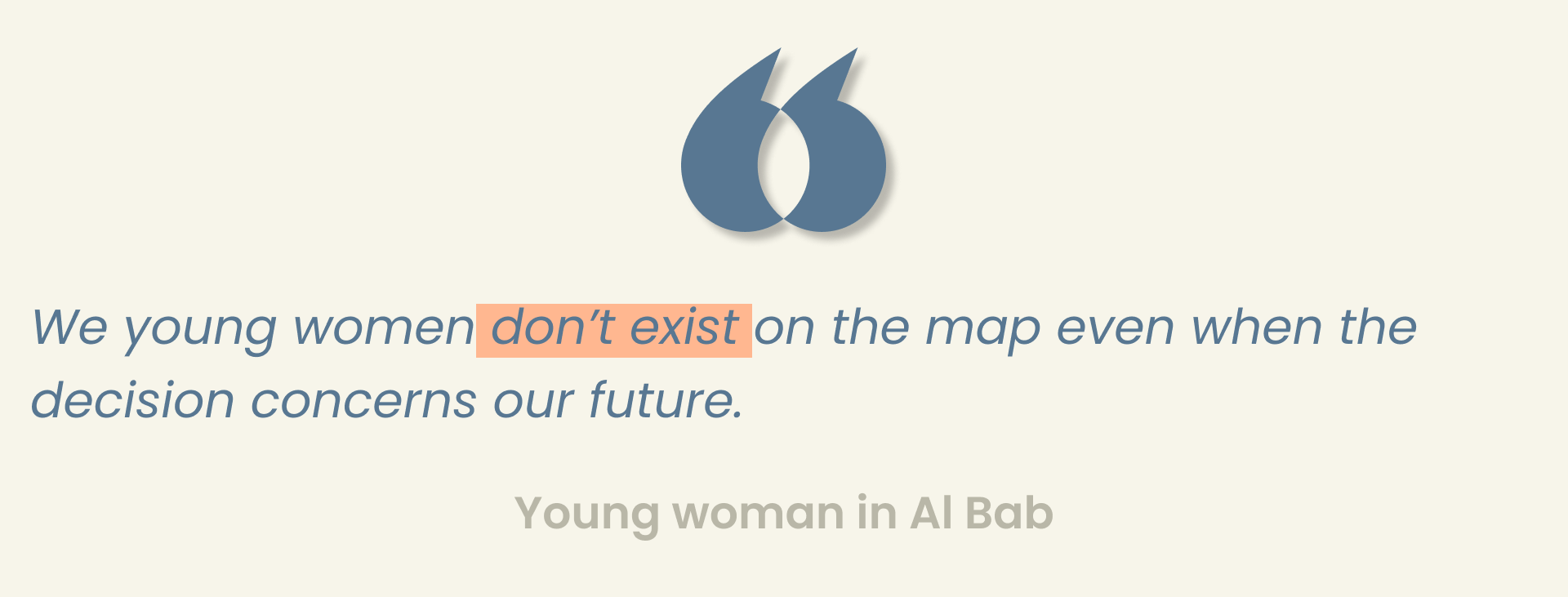
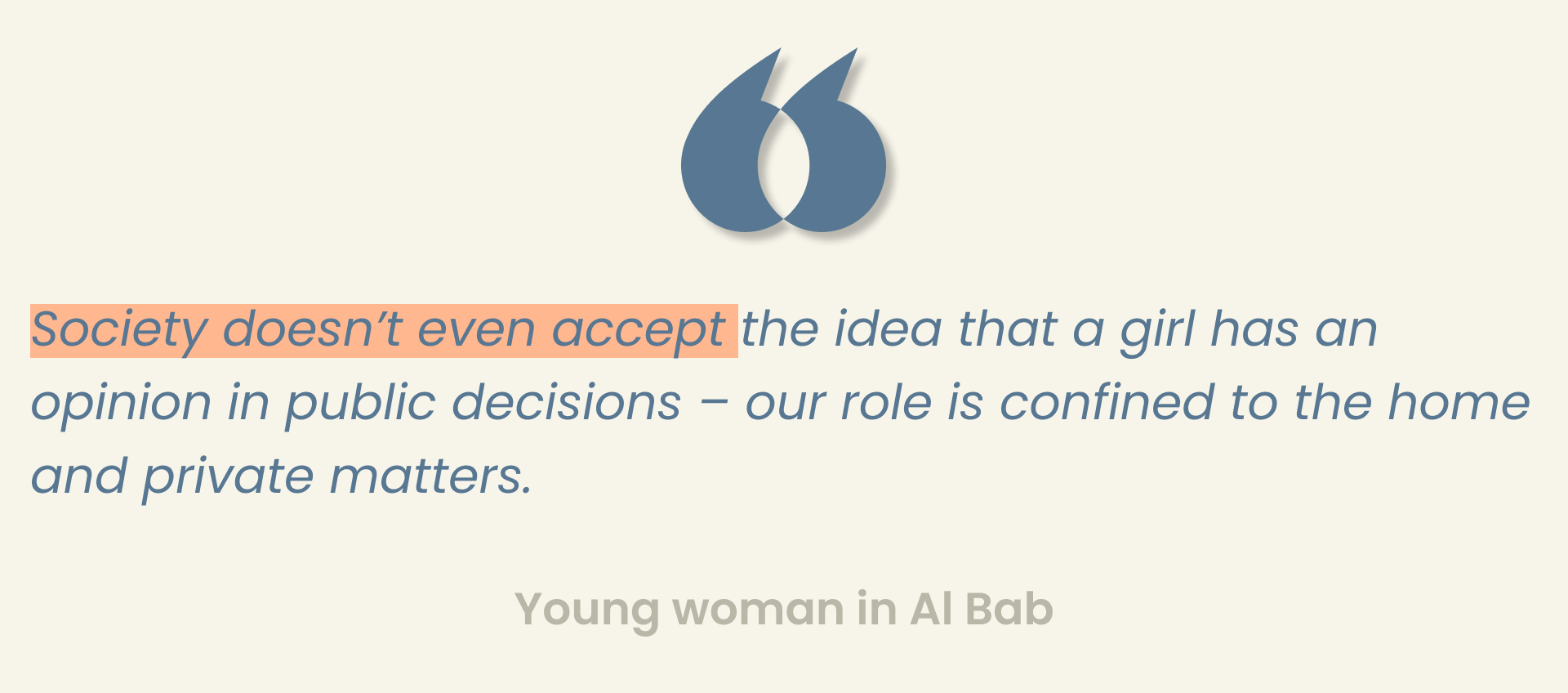
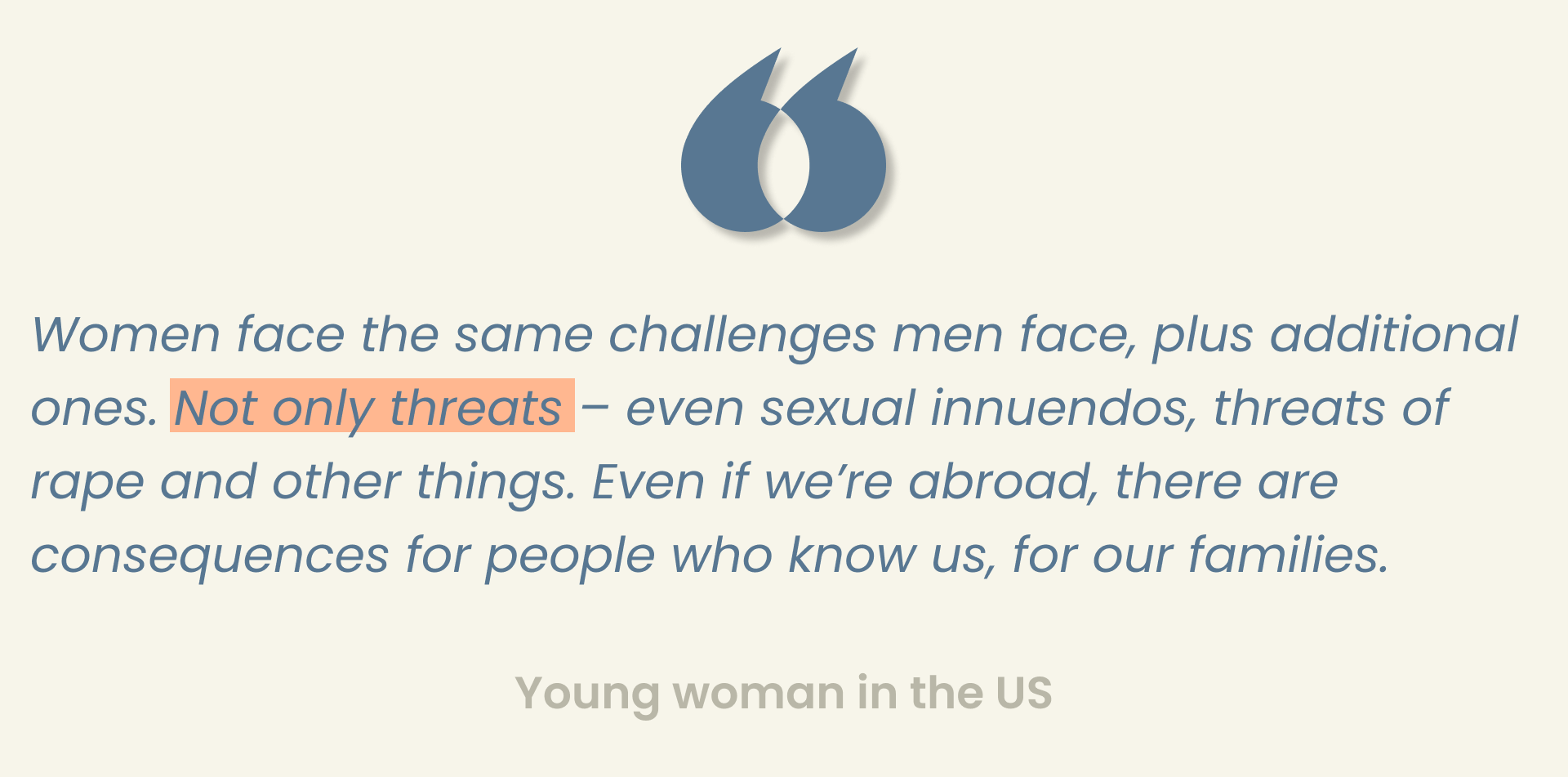
Our research reveals that women in Syria face the same challenges that are affecting all young people, plus additional gender-specific economic, security and social constraints. The effects of conflict, displacement and economic collapse have forced many women to become the primary or co-breadwinners. Yet they’re also now subject to new legal and social ‘morality’ restrictions that constrain their public presence, such as a make up ban for female public sector workers in Latakia.




Women also face greater security fears than men, in both the on- and offline world.
Source: Online survey of 502 young Syrians aged 18-35 (respondents could select up to five answers)

What Solutions Do Young People See?


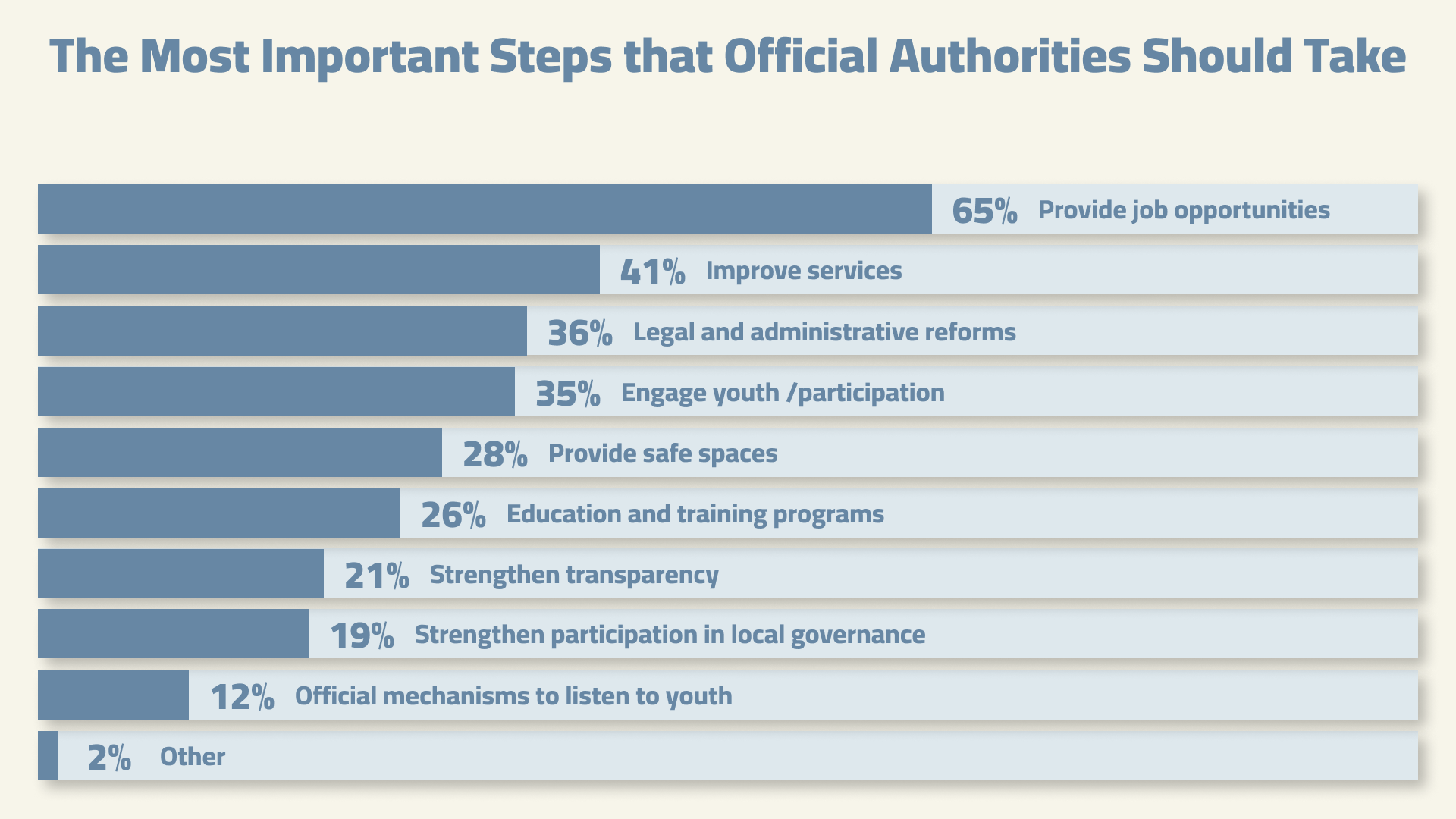
Syrian young people face profound, ongoing challenges, yet our research uncovers a wealth of their own ideas for how they might begin to build a brighter future for themselves, for their communities and for Syria. Despite the significant differences in their experiences – whether due to geographic location, gender, or education – the ideas of the young people we engaged with were characterised by remarkable similarities and recurrent themes. They want a future embedded in justice, peace and security.
Source: Online survey of 502 young Syrians aged 18-35 (respondents could select up to three answers)
As Syria's transitional government shapes its national youth policy, the recommendations below for policy-makers within Syria’s transitional government and in the international community, are drawn directly from young people's ideas:
For Syria’s transitional government:
- Prioritise restoring economic opportunities for young people. This must begin with concerted, coordinated efforts to restore basic essential services, including internet, electricity, water and health services. Targeted youth employment programmes and apprenticeships, linking vital reconstruction work to training and development opportunities, should be introduced alongside enforceable youth hiring quotas and tax incentives for businesses. Particular focus should be given to an even geographic distribution of employment opportunities.
- Embed rights and freedoms: Guaranteed rights and freedoms must be at the heart of the new social contract being constructed between Syria’s authorities and its citizens. Citizens must be allowed to organise and express their views without fear of repression or reprisal. Women’s rights must be given equal precedence. And specific investment must be made to counter online mis-and disinformation.
- Implement pathways to transitional justice and accountability: End the culture of impunity that has dominated Syria for too long. Ensure the rule of law applies equally to all. Invest in measures, such as facilitated dialogue to address historical grievances, that can rebuild trust between former factions and fractured communities. Commit to the transparent documentation and international conveying of violations.
- Ensure equitable safety and security across Syria: Take immediate action to ameliorate the security situation in Sweida, Homs, coastal areas and the northeast of Syria, ensuring non-discriminatory protection for all citizens and accountability for all human rights abuses.
- Take steps to harness the energy, vision and determination to participate of Syria’s young people: Issue clear frameworks for genuine and inclusive youth representation in decision-making at national and local level. Specifically address gender restrictions on female participation in political processes and decision-making, as well as the barriers faced by young people from rural areas and minority communities. Fund targeted political skills development for young people.
For the international community:
- Seek to restore youth programming provision in Syria and reverse the collapse in funding. In particular, seek to restore democracy, rights and participation programming, providing core-funding to youth-led groups and seeking to build the capacity of local organisations. Maintain geographic balance with programmes prioritising under-served areas.
- Provide targeted support to transitional justice initiatives, including the funding of awareness programmes targeted at younger cohorts and those seeking to ensure youth representation in any transitional justice mechanisms.
- Work to hold the transitional authorities to account on their stated commitments to youth participation, women’s rights and the protection of minority communities.
- Maintain flexibility on the issue of voluntary return for Syrians currently in the diaspora, including those who may want to return to Syria temporarily. Forced choices between residency and return are not an option.
Source: Online survey of 502 young Syrians aged 18-35 (respondents could select up to three answers)
Economic opportunity:
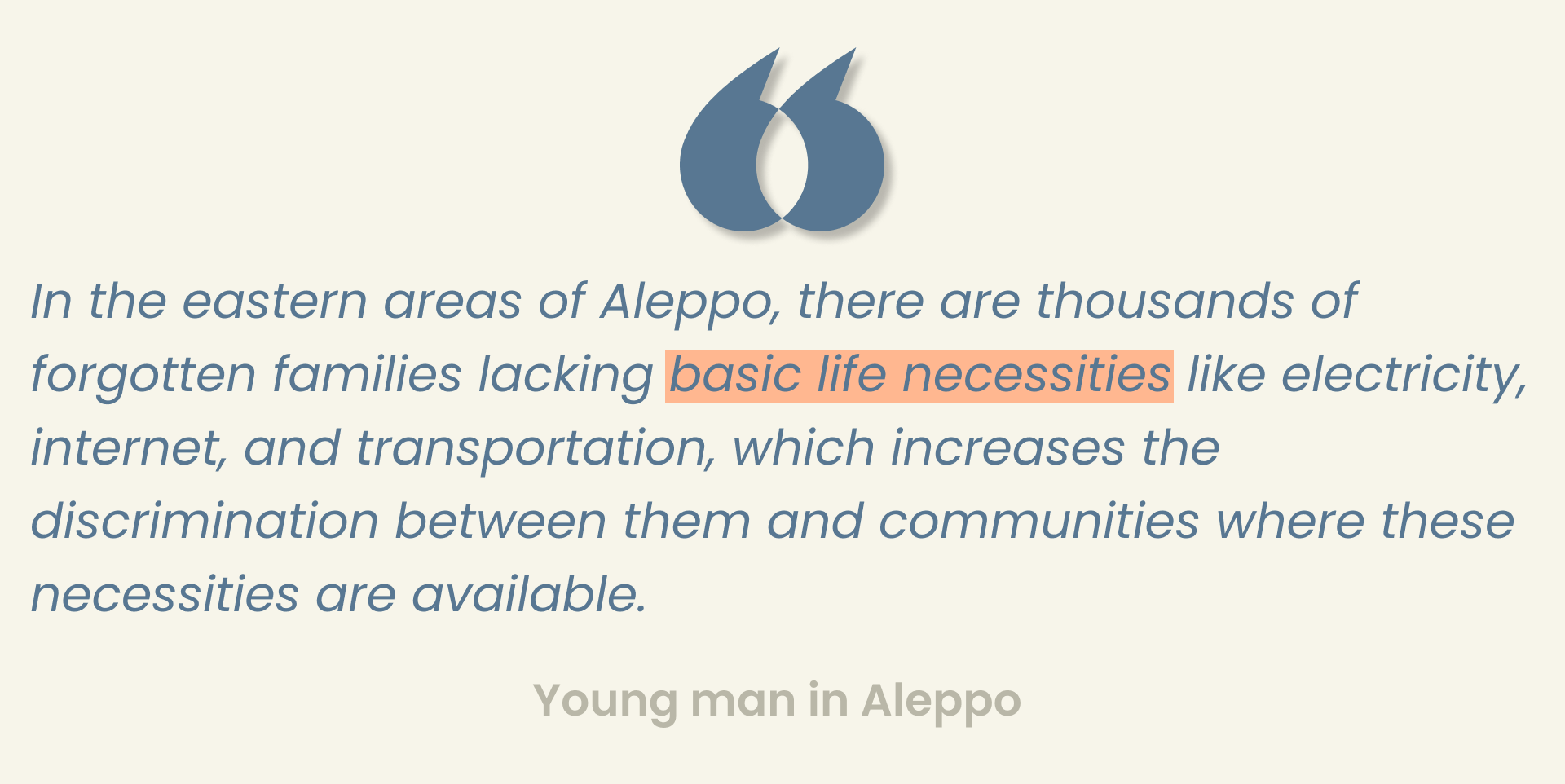
✓ Restore basic services, such as internet, electricity, water and health
✓ Introduce targeted youth employment programs, training and development opportunities linked to reconstruction
✓ Introduce enforceable youth hiring quotas
✓ Invest in apprenticeships
✓ Ensure even geographic distribution of employment opportunities so youth in under-served regions also benefit

Rights and freedoms:
✓ Allow youth to organise without repression
✓ Provide safe spaces for expression without fear and establish protection mechanisms for opinion holders
✓ Develop accessible information for the deaf and mute community and improve transportation accessibility for persons with disabilities
Justice and accountability:
✓ Ensure rule of law applies equally to all
✓ Invest in civil peace campaigns to build trust among former factions
✓ Continue documentation and international conveying of violations
✓ Ensure justice, not just equality, in opportunities for women
✓ Create cross-regional exchange programs, facilitating structured dialogue to address historical grievances
Safety and stability:
✓ Ensure equitable security, taking immediate action in Sweida and coastal areas
✓ Ensure non-discriminatory protection for all communities and accountability for sectarian violence
Participation:
Representation…
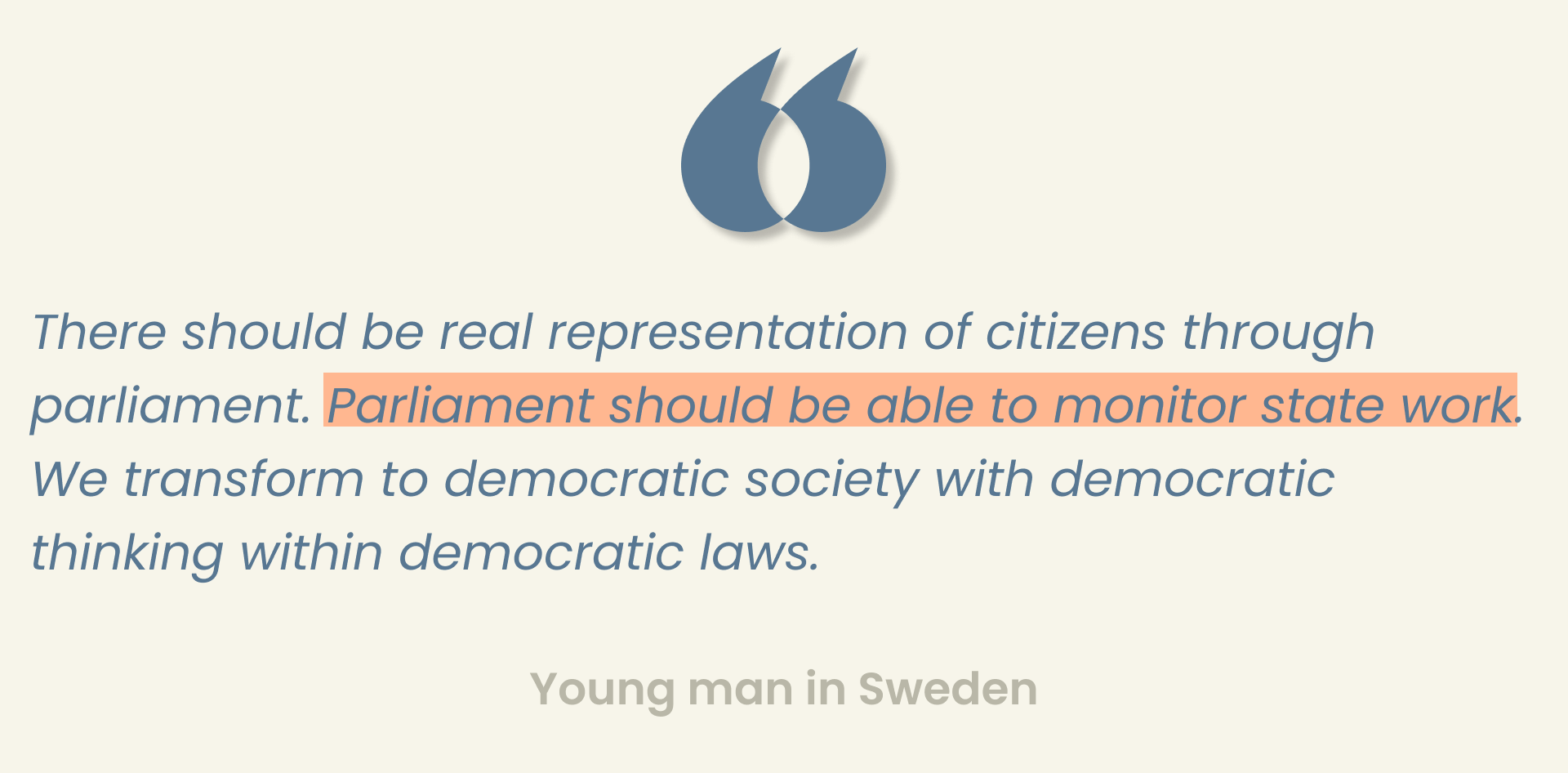
✓ Issue clear laws for genuine youth representation in decision-making centers, e.g. a 30% youth quota in administrative and legislative councils
✓ Create youth chambers under the Social Affairs Ministry, in each governorate and local, elected youth councils at city or town level with real budget authority
✓ Facilitate licensing for youth unions, parties and associations
✓ Create interactive, electronic government platforms and conduct electronic referendums before major decisions
✓ Activate the proposed Ministry of Youth

Women…
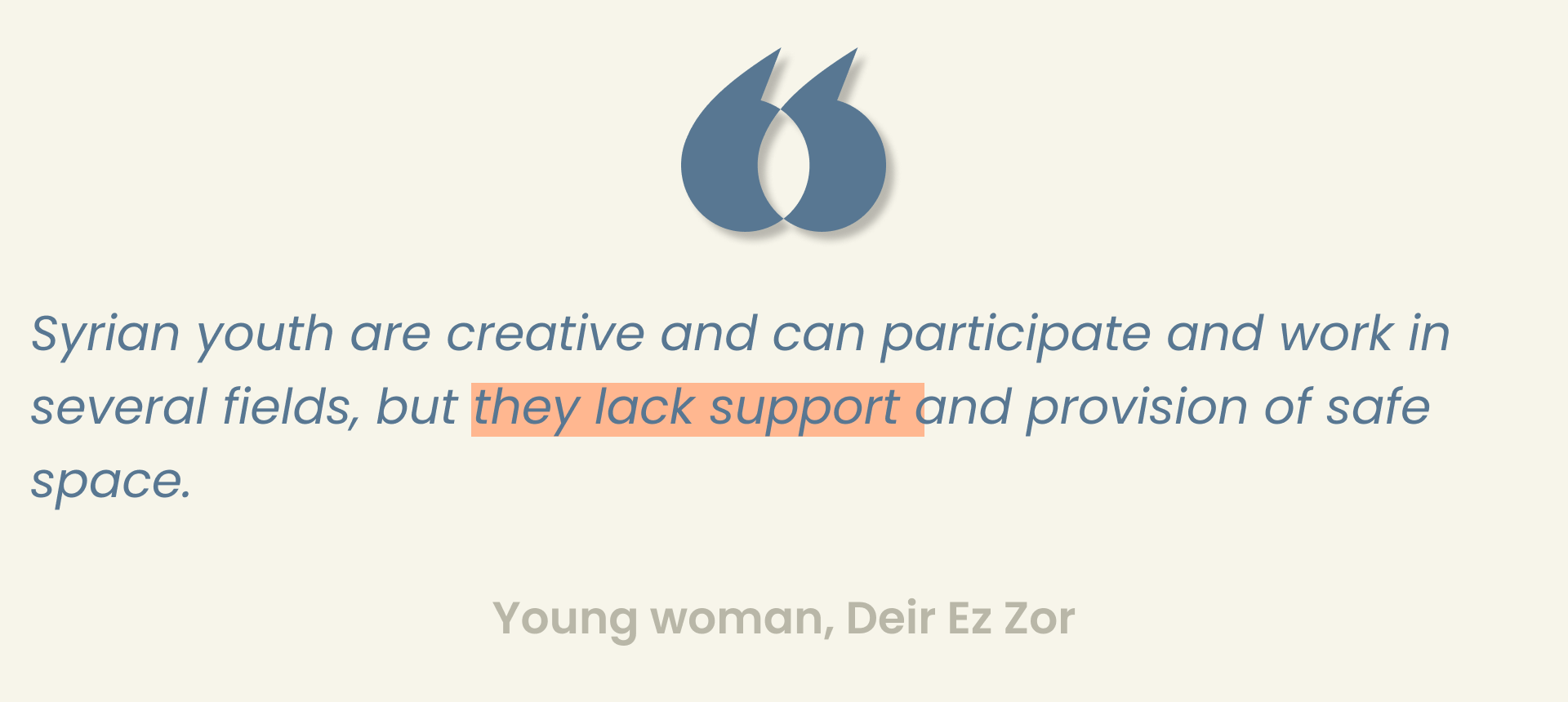
✓ Address gender restrictions on female participation
✓ Allocate safe spaces, such as women’s centers, ensuring freedom of expression away from social surveillance
✓ Provide safe transportation for young women to participate in activities

Outreach…
✓ Bridge the gap between IDPs and urban youth
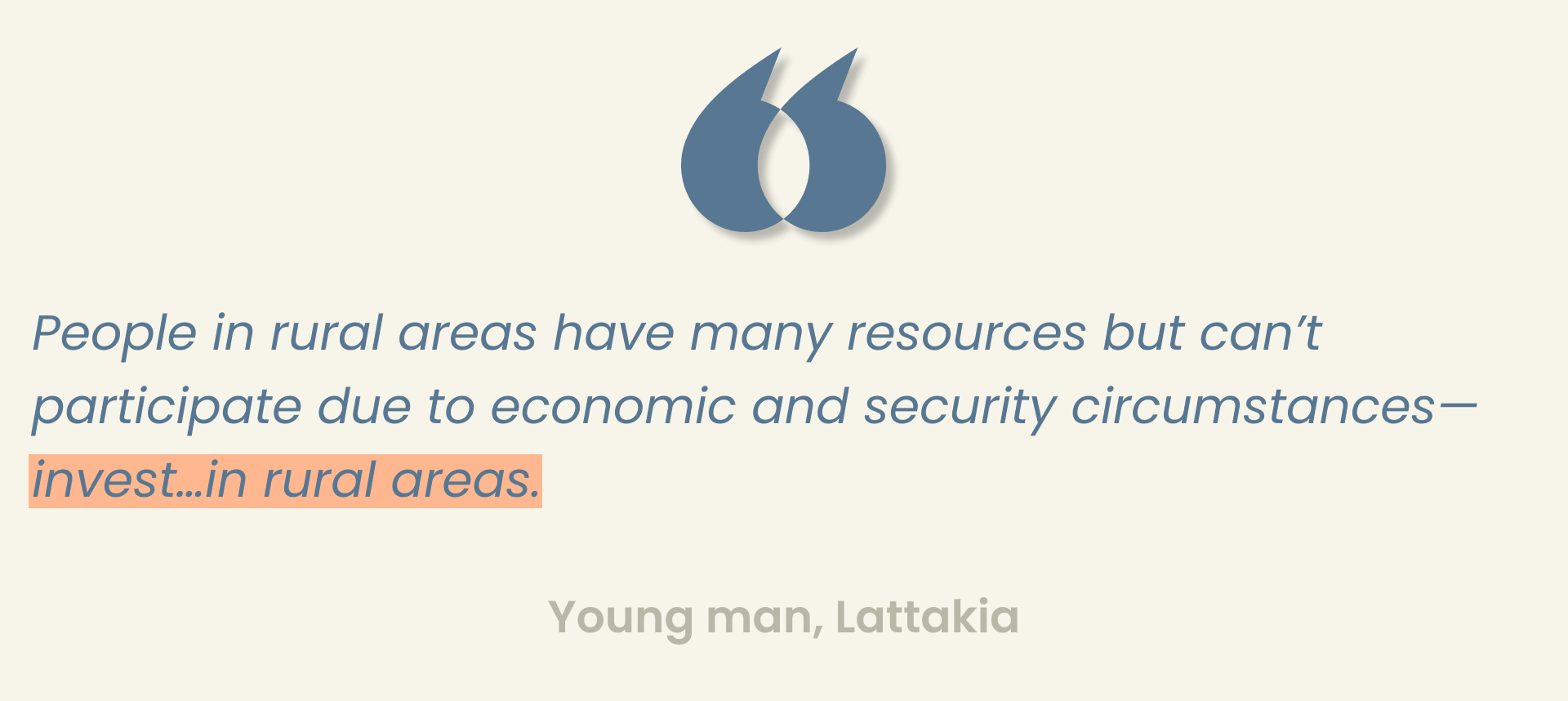
✓ Create youth programs with rural outreach, specifically targeting engagement with minority communities facing heightened security threats
✓ Establish association points in rural areas and villages

Skills…
✓ Fund targeted help to develop young people’s political, legal, social and cultural skills e.g. training in policy or budget analysis, legal drafting, coalition building, strategic communication and leadership.

Online…
✓ Provide training to young people in how to use social media effectively for awareness
✓ Create safe, free, neutral spaces, investing in local media and media literacy, to give young people the capacity to express their views and have impact
✓ Implement electronic crimes law for digital security
✓ Counter misinformation as a core peacebuilding and conflict prevention tool

Conclusion


The voices documented here represent essential input into Syria’s transition towards a more just and democratic future. The median age of Syria’s population is 23. Over 42% are under 25. For the country’s reconstruction, this represents an enormous opportunity. The energy, ideas and optimism of youth are tremendous assets, but Syrian young people need opportunities in education, vocational training, work and meaningful political engagement. If they become economically marginalised and politically excluded, if their vision of a rights-based society fails to materialise, if this moment for justice and accountability is allowed to slip past, they will become a lost generation and a rare, precious window of opportunity for Syria will be lost with them.
At present, Syria appears to lack a clear direction and coherent roadmap for its political transition and economic recovery. Decision-making is highly concentrated in a narrow circle with little clarity on the shape of the new constitution, electoral timelines or institutional reform. The space for new politics remains severely restricted. Mechanisms for transitional justice are beginning to emerge, but must be broadened, deepened and accelerated: without them, lasting stability is likely to remain elusive. Popular frustrations at this lack of progress, and at the economic reality on the ground, are growing.
Syrian young people are pouring their energy into the avenues for participation that are available to them, but they are acutely aware of the limitations of their decision-making power and their ability to enact meaningful change. If this continues, there is a risk that their defiant, determined hope will morph into hopelessness, disillusionment and despondency. Excluding and alienating this most vibrant section of Syrian society would be disastrous for the country’s reconstruction. Policymakers, at home and abroad, must take heed and act in response to young people’s demands. Trust in the transitional government – and in what comes next – can only be built through genuine engagement with young people on the issues they care about.
The mixed-methods research for this report was conducted by Dr. Khouloud Al Khatib and Mohd Khalil for The Syria Campaign.
This project is funded by the German Federal Foreign Office, the European Union, and the Danish Ministry of Foreign Affairs and supported by the Deutsche Gesellschaft für Internationale Zusammenarbeit (GIZ) GmbH.